Green & Gorgeous: 23 Eco-Friendly Vendors You Should Know About

Interior designers wield a unique power to shape a healthier planet through their design choices. From sustainable materials to energy-efficient solutions, every decision in the design process can contribute to a greener, more sustainable future. So, I’ve been on the hunt for vendors that supply products that are non-toxic, ethically and sustainably sourced, and overall better for the earth and its inhabitants–while still being stunning! Here are my findings.

Furniture

The era of fast furniture is on its way out. Offer your clientele high-quality pieces that distinguish themselves through superior, non-toxic, and ethically derived materials. Make choices that resonate with our collective well-being and are engineered for lasting durability.

Maiden Home, a woman-founded brand, offers an array of sustainable and ethically sound furniture, which, in addition, boasts an incredibly stylish and timeless aesthetic.

West Elm uses a glossary of symbols to indicate the fair trade, handcrafted, and sustainably sourced attributes of their products, helping you make informed sourcing decisions.

Medley specializes in crafting exquisite sofas, beds, and other furnishings using domestically sourced hardwoods from forests certified by the FSC (Forest Stewardship Council) and solid bamboo, placing ethical craftsmanship at the forefront.

The Citizenry showcases a delicious assortment of ethical furniture created from thoughtfully selected quality materials like vegetable-tanned leather, solid wood, and linen, alongside decorative pieces.

You may know Etsy for things like monogrammed gifts, but more and more sellers who reclaim and upcycle furniture are diversifying their unique offerings, and it’s a great way to support small businesses.

Textiles

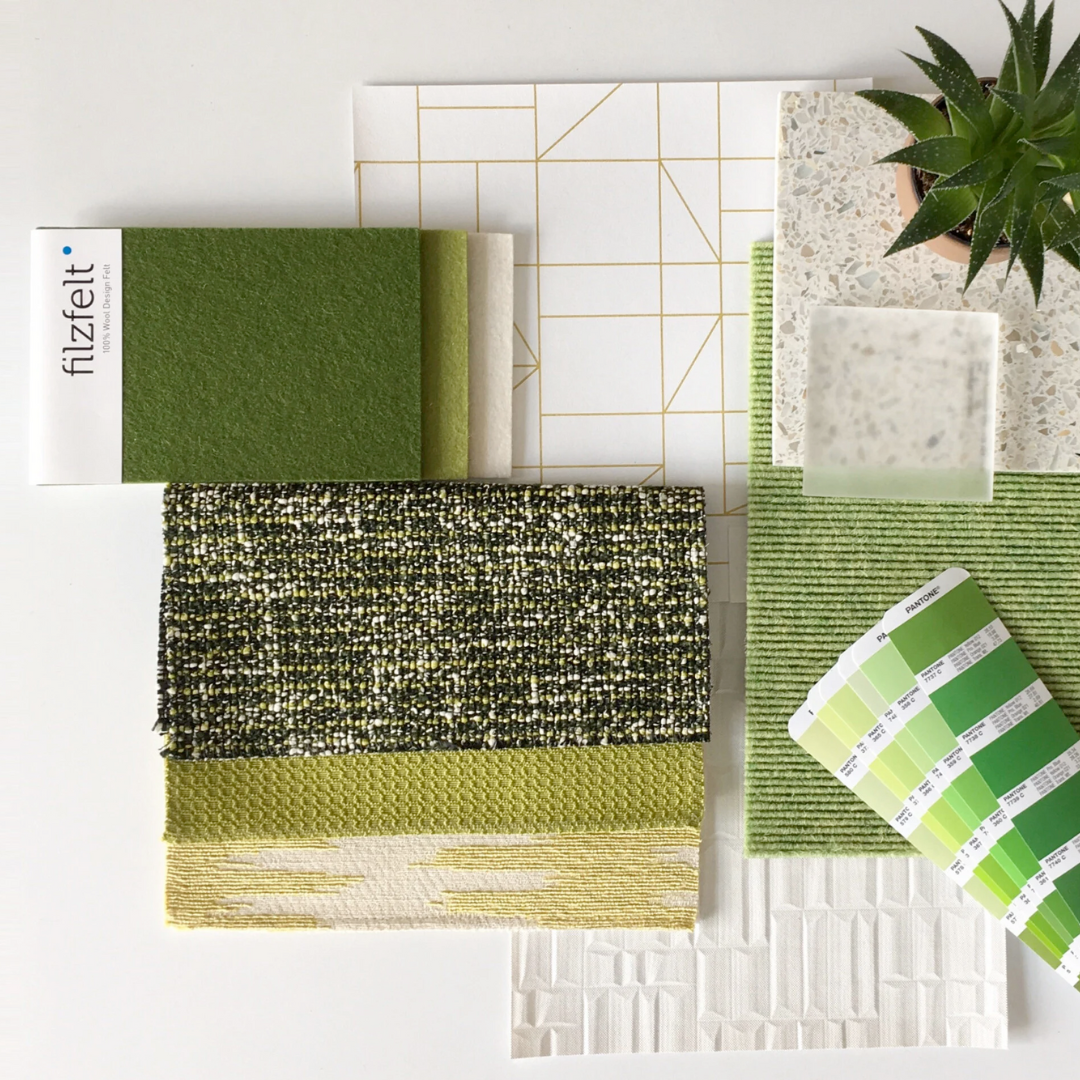
Look for textiles created using environmentally conscious methods, including the use of sustainably sourced materials like organic cotton, hemp, or recycled fibers, and gentle dyes.

MadeTrade offers a whole host of “ethical, sustainable, and beautiful” furniture, decor, and textile items, including bedding and rugs.

Armadillo introduces minimalist, elegantly designed rugs crafted from sustainable materials such as wool and jute, proudly holding the distinction of being a Certified B Corporation™️.

Minna, another certified B Corp, collaborates with artisans from Central and South America to create exquisite home goods utilizing traditional techniques and vintage, as well as natural textiles.

Lorena Canals presents a stunning collection of non-toxic, machine-washable area rugs handcrafted by artisans in northern India who exclusively use recycled and natural fibers and non-harmful dyes.

Lighting

The notion of sustainable lighting implies the use of energy-efficient LED light bulbs, materials derived from local and natural sources, or repurposed and recycled materials.

Schoolhouse specializes in crafting enduring, energy-efficient products for various areas within homes, spanning fans, clocks, and lighting fixtures.

Stickbulb offers lighting systems which are crafted from sustainable materials locally sourced from the greater southern New York region, resulting in a sleek, minimalistic collection of fixtures.

Sin has a fascinating terracotta and stoneware collection, while klaylife has clay beaded lighting created by a community of women in Kwazulu-Natal, South Africa.

Flooring

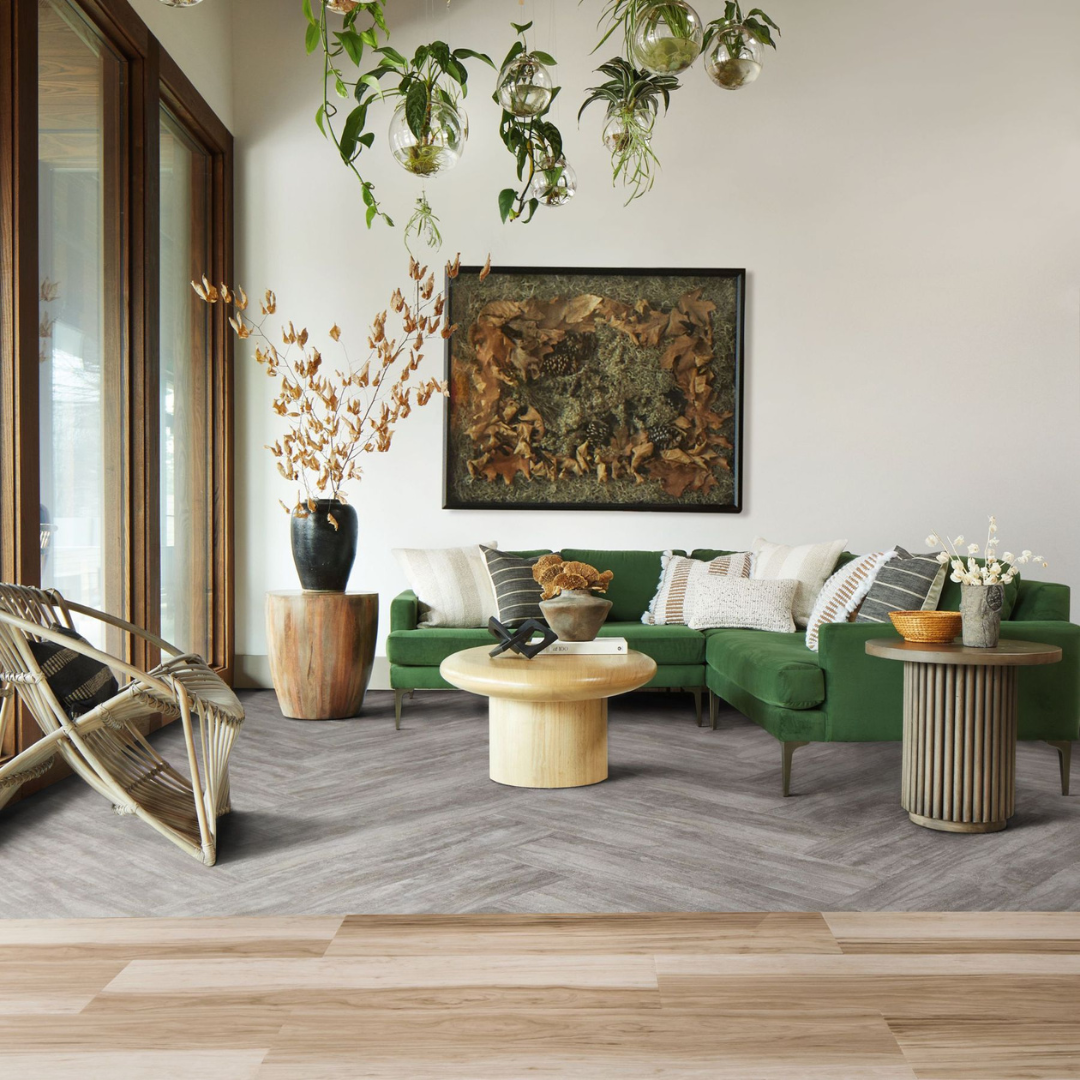
More environmentally conscious flooring options may involve sustainable materials such as wood, stone, recycled glass, natural linoleum, or even cork. Traditional flooring can introduce VOCs (volatile organic compounds) into the air, including known and suspected carcinogens like formaldehyde and benzene.

Interface provides a range of flooring solutions encompassing luxury vinyl tiles and carpet tiles, all of which carry a series of certifications endorsing their eco-friendliness.

Aged Woods collaborates with designers to achieve visually striking reclaimed wood flooring.

True to its name, Sustainable Flooring offers diverse sustainable flooring alternatives, from cork to bamboo.

Paint

Eco-friendly paints exhibit minimal or zero presence of toxins and VOCs, promoting both human health and environmental well-being.

Benjamin Moore has their Eco Spec line with zero VOCs and zero emissions.

Sherwin Williams has a couple of Zero VOC Interior Latex options within their ProMar line.

ECOS Paints delivers non-toxic, Zero VOC paints for a wide variety of applications, including an Air Purifying Paint.

Portola Paints offers both Low and Zero VOC paints, depending on the finish.

Wall Finishes

Opt for wall finishes without harmful chemicals, and that leave a minimal environmental footprint throughout their lifecycle.

Burke Decor carries a large number of eco-friendly wallpapers under their own name, as well as from several other manufacturers.

Tile Club has numerous recycled glass tile options to choose from.

Naturewall is an FSC® accredited business offering wallcovering solutions such as reclaimed wood planks and panels, among others.

Many of the above-listed vendors also carry eco-friendly items in other categories, so I would encourage you to look around each website. I hope I’ve helped to prove that it’s possible to choose environmentally kinder options without sacrificing style. It’s a win for all of us!

xx, Danae

How to Create a Digital Detox Plan Without Pausing Your Life

From project management to style inspiration to networking, interior designers rely heavily on screens. And at the end of a long work day, sometimes you just want to unwind with social media or TV. However, this constant exposure to screens can lead to headaches, strained eyes, sleep troubles, and an overall feeling of disconnect. If you find yourself yearning for a break and seeking a sense of grounding amidst the digital chaos, you're not alone. Keep reading for 5 practical ways to step away from the screen without compromising your productivity.

1. Practice Mindful Digital Usage

Instead of mindlessly scrolling through social media or endlessly browsing the internet, practice intentional and mindful digital usage. Set a specific purpose for using your devices and limit the time spent on non-essential activities (e.g. 15 minutes for design inspo or funny videos). There are likely time usage control settings in your phone’s own system, as well as within popular social media apps, to help you snap out of it.

2. Establish Digital-Free Mornings and Evenings

Begin and end your day without immediately reaching for your phone or computer. Set your phone aside after turning off the alarm, or consider using an alarm clock separate from your phone. Use the morning to set intentions, practice mindfulness, or do some light stretching or meditation. In the evenings, wind down by journaling or enjoying a relaxing bath. If that sounds tough, just commit to the first and last 5 minutes of your day, and see how even a little time will make a big difference!

3. Design a Tech-Free Oasis

Designate a space in your home or office that is entirely free from screens and digital distractions. At home, your bedroom might be a good candidate, and you can make it cozy with soft lighting and tactile elements like books, plants, or artwork to engage your senses. At your office, any nook will do. This space can serve as a sanctuary you can retreat to for relaxation, reflection, and creative thinking.

4. Plan Screen-Free Meals

Make a conscious effort to stay off your phone during mealtimes. Instead, fully immerse yourself in the experience of eating, whether during your work day or outside of working hours, whether alone or accompanied. Savor the flavors, engage in conversation with loved ones, and appreciate the simple pleasure of nourishing your body and mind.

5. Engage in Analog Hobbies

Rediscover the joy of analog hobbies and activities that don't involve screens. Think about analog activities you can do instead of reaching your phone at different times throughout the day. For example, why not join a book club and read to wind down after a long day? Try a hobby like painting or DIY projects as a creative outlet, or try volunteering on weekends to socialize with others in a fulfilling way. Activities like these provide a much-needed break from technology while allowing you to tap into your creativity, connect, and unwind.

In a nutshell, embracing mindfulness and intentionality in your screen time is the key to naturally reducing its hold on your life. By replacing screen activities with alternative options, even if it initially feels challenging, you'll provide much-needed respite for your eyes and mind, while rediscovering genuine connections that may have been missing. Start small, and you’ll remember how satisfying it is to spend more time in the analog world!

xx, Danae

A Breakdown of 7 Software Solutions for Your Interior Design Business

Navigating the business of interior design often feels like an ongoing journey of trial and error. Perhaps you've found yourself switching between various programs and platforms, seeking that elusive efficiency. The nagging feeling that there must be a resource out there to help you avoid redundant work and prevent important details from slipping through the cracks is all too familiar. Well, good news – I've done some of the homework for you. In this article, you'll find an overview of the most promising players in the realm of project management software. Let's dive in!


1. StyleRow

  • Who it's for: Interior designers and design professionals

  • What's great about it: StyleRow offers a seamless platform that combines project management with sourcing and procurement. Its powerful integrations with industry suppliers and manufacturers make it a one-stop solution for managing projects from conception to completion.

  • Considerations to note: The learning curve for fully utilizing all features can be steep for beginners.

  • Pricing: StyleRow offers a free version with limited features, and premium plans start at $49/month. Try their 14-day free trial.

2. Dubsado

  • Who it's for: Service-based businesses including interior designers

  • What's great about it: Dubsado is renowned for its customizable forms, contracts, and automation features. It enables designers to streamline client onboarding, track project progress, and manage payments, all in one platform.

  • Considerations to note: The user interface can be overwhelming initially, and some users might find the design customization options a bit limited.

  • Pricing: Dubsado offers a free trial with limited features, and plans start at $20/month or $200/year.

3. Monday

  • Who it's for: Teams of all types, including interior design teams

  • What's great about it: Monday is a highly visual and versatile platform that helps teams manage tasks, projects, and workflows. With customizable templates, it's easy for designers to tailor the platform to their specific needs.

  • Considerations to note: The pricing can be relatively high for smaller design firms, and the learning curve might be steeper for some users.

  • Pricing: Monday offers various pricing tiers, starting at $0 for 2 seats or $24/seat per month for unlimited seats. You can try most of their plans with a 14-day free trial.

4. Materlog

  • Who it's for: Interior designers and architects

  • What's great about it: Materlog is designed specifically for design professionals, offering procurement tracking and supplier communication services to take those tasks off your plate.

  • Considerations to note: Some users might miss more features such as visual presentations of selections by room.

  • Pricing: Materlog starts at $45 per month, and they currently have a waitlist. You can also contact them for a tailored pricing plan.


5. Alcove

  • Who it's for: Interior designers, builders, and purchasing agents

  • What's great about it: Alcove combines project management with visual collaboration. Designers can create mood boards, gather feedback, automate tracking, and manage orders and financials seamlessly, all in a visually appealing environment. It even offers Gmail integration.

  • Considerations to note: It’s a newer platform and, consequently, not as tried-and-true as some others.

  • Pricing: Plans start at $75/month. Try their 30-day free trial.


6. Gather

  • Who it's for: Mid- to large-size interior design teams

  • What's great about it: Gather is designed to streamline the procurement and tracking of FF&E. It helps designers manage specifications, documentation, orders, and tracking in a user-friendly way. Gather includes useful features like a clipper tool and messaging with team members and clients.

  • Considerations to note: It may be cost-prohibitive for smaller design firms.

  • Pricing: Gather’s plans start at $165/monthly (annual commitment) for 5 seats, and they also offer custom pricing for teams larger than 10. A free trial can be requested.

7. Gold Star Pro

  • Who it's for: Interior designers and design firms

  • What's great about it: Gold Star Pro offers an all-in-one back-end business management solution for everything from social media content scheduling to Facebook and Google ads to email communication. Its interface makes it easy for designers to stay organized and keep clients informed. Basically, it takes care of the essential tasks that are furthest from actually designing.

  • Considerations to note: While this software effectively aids in managing various backend aspects of business operations and promotion, it doesn’t include many of the features that design project management programs often do include, such as product libraries or order tracking.

  • Pricing: Gold Star Pro offers a 14-day free trial, with plans starting at $97/month.

As you can see, a diverse array of programs is emerging, aimed at alleviating the operational demands of the business facet within the realm of interior design. Fortunately, you can take advantage of the free trials that these offer and find the program that is most aligned with your own firm. Discovering the perfect match has the potential to be transformative for your interior design business!

xx, Danae

Join the Conversation: Bridging the Gaps in Interior Design Software

Whether you're a seasoned industry expert or a budding designer, the demand for comprehensive software solutions is on the rise. Despite the availability of numerous popular platforms, there persists a longing among interior designers for a system that bridges the functional gaps and takes their productivity to new heights. As an advocate for enhancing the industry, I believe it's time to initiate a meaningful conversation and identify the missing pieces. By doing so, we can inspire developers to bridge these gaps and create the ultimate all-in-one solution that seamlessly integrates project management and administrative features, meeting the common functional needs sought after by designers like you.

I invite you to explore this (surely incomplete) list of functions that I repeatedly hear designers seeking in a project management program. What would you add?

  • Task Tracking

  • Time Tracking

  • Procurement Tracking

  • Project Timeline & Milestones

  • Team Communication

  • Client Communication

  • Vendor Portfolio

  • Material & Product Library

  • Clipper Tool Extension

  • Design Resource Library

  • File Storage

  • Moodboard & Presentation Creation

  • 2D & 3D Drawing

  • Budget Tracking

  • Template Creation

  • Invoicing & Purchase Orders

  • Bookkeeping

  • Performance Analytics

  • Mobile App Compatibility

And to think these are just some of the many moving parts that designers juggle behind each beautiful project! Beyond these crucial functions, I often come across shared grievances from designers concerning the project management program they utilize. Do any of these hit close to home for you?

  • Poor User Interface (UI) Design

  • Limited Integration

  • Complexity and Learning Curve

  • Limited Collaboration and Communication Features

  • Insufficient Customization

  • High or Inflexible Pricing Plans

  • Unreliable Customer Support

Calling all the visionary minds shaping the industry! It’s time to share your thoughts on the improvements and features you would like to see in interior design software. If you would like to participate in our questionnaire, feel free to draw inspiration from the points above that ring true for you or add your own unique insights. We’d love to hear from you!

TAKE OUR BRIEF SOFTWARE QUESTIONNAIRE

We eagerly await your insights and thank you for being a part of this journey towards innovation and excellence in the interior design industry!

xx, Danae
Move Over Sunbathing; Have You Tried Forest Bathing?

What if I told you that there's a hidden oasis of relaxation, without the scorching UV rays and pesky sand, where you can disconnect from everyday noise and reconnect with nature? It’s time to try forest bathing!

What is Forest Bathing?

No, it's not taking a bath amidst the trees (though that could be quite an adventure!). Forest bathing, or "Shinrin-yoku" as it's known in Japan, is the practice of immersing yourself in the soothing embrace of nature, particularly the forest. It's not a bath in the traditional sense but more like a sensory soak in nature's serene beauty. The term was coined in Japan in the 1980s and has since gained popularity as an alternative form of relaxation and rejuvenation.

Not Your Average Hike

Unlike hiking or trekking, forest bathing doesn't involve conquering peaks or covering vast distances. It's a slow, mindful, and meditative experience. Imagine strolling leisurely through the woods, allowing yourself to be fully present in the moment, and embracing the sights, sounds, smells, and textures of the forest. It's a chance to let go of stress, quiet the mind, and connect with nature on a deeper level.

Benefits of Forest Bathing

Beyond the obvious appeal of a relaxing experience (ecotherapy, anyone?), the forest air is filled with phytoncides, natural chemicals that support the immune system. Immersing yourself in nature can spark creativity and improve focus and clarity of thought. Being in nature also promotes better sleep quality, leading to more restorative rest.

How to Engage in Forest Bathing: A Gentle Guide

Choose your Destination: Find a forest or wooded area near you. It could be a local park, nature reserve, or any green space with plenty of trees. The more diverse the flora, the better.

Gear Up: You don’t need much; just be sure to dress for the weather, and consider bringing a picnic blanket, a journal with a pen, and snacks and water if you’ll be out for a while.

Disconnect to Reconnect: Leave behind the distractions of technology. Turn off your phone or put it on silent. This is your time to be present with nature, not with screens.

Use All Your Senses: As you walk, engage all your senses. Notice the rustling of leaves, the chirping of birds, the earthy aroma of the forest floor, and the feel of the bark against your fingertips. You can even place your bare feet on the earth for a “grounding” experience.

Find Your Spot: When you feel drawn to a particular spot, pause and stay there for a while. It could be near a stream, under a majestic tree, or wherever you feel most comfortable.

Be Mindful: Let your thoughts come and go like leaves floating downstream. Be fully present in the moment and observe without judgment.

Stunning Forest Bathing Destinations

The United States boasts an abundance of natural wonders, and several places are perfect for indulging in the magic of forest bathing, including:

  • Redwood National and State Parks, California

  • Acadia National Park, Maine

  • Olympic National Park, Washington

  • Great Smoky Mountains National Park, Tennessee, and North Carolina

  • Adirondack Park, New York

If you're planning to venture into a new or remote region for your forest bathing experience, it's wise to consider making it a group excursion for added safety. Fortunately, there's a growing availability of guided tours that can enhance your forest bathing journey, such as this one in Asheville, North Carolina, or this one in Honolulu, Hawaii.

However, you don’t need to embark on grand journeys to far-off destinations for a transformative experience. Whether you choose to wander alone or gather friends, start by taking small, mindful steps right in your local area. Explore the nearby parks, meander through wooded areas, and let the enchanting beauty of nature surround you. Happy forest bathing!

 xx, Danae
Feel Joy, Balance, and Abundance in Your Business with The Interior Design Standard

As you know, Elite Design Assistants takes pride in providing helpful tips, information, and resources to you about the interior design industry that will help you succeed in running the most fulfilling and profitable business possible. That’s why we want to share The Interior Design Standard with you! 

It’s time to get your structure and mindset in place so that you can fully step into your confidence as an entrepreneur. The Interior Design Standard is the ONLY program that provides a turnkey business model for a wildly profitable design firm.  

The Interior Design Standard was created by Sandra Funk, CEO and Creative Director of House of Funk, a boutique interior design and renovation firm that has award-winning designs featured in publications such as Elle Décor, House Beautiful, The Huffington Post, Aspire Design and Home, and Luxe Interiors + Design. 

WHY IS THE INTERIOR DESIGN STANDARD FOR YOU?

With hundreds of designers saying the Standard has changed their lives, we wanted to break down why you should be looking at this program. It’s for you if…

  • You’re tired of all the different ways of doing business and you’re ready for ONE tried and true business model that both you and your clients will love. 

  • You’re stuck in the day-to-day tasks and lack the systems and processes to get your team running like a well-oiled machine while you’re out landing dream clients. 

  • You’re looking for a trusted advisor to give you the step-by-step process that’s been tested over a 20+ year career and by hundreds of designers. 

If any of the above resonates, The Interior Design Standard is for you!

WHAT’S INSIDE THE INTERIOR DESIGN STANDARD?

Delivered in a friendly digital format, this program enables you to digest and implement at your own pace because you have lifetime access! The program includes 6 modules showing you all the things you need to take your business from surviving to thriving. 

Modules Include: 

  • Module 1: Master the Tech to Catapult Ahead

  • Module 2: Confidently Price Your Services for Ideal Clients

  • Module 3: Attract & Land Ideal Clients

  • Module 4: Scale with Streamlined Processes

  • Module 5: Improve Your Buying Power & Trade Relationships

  • Module 6: Develop Your Dream Team

Editable process and contract templates along with live virtual community events, access to the ultimate design community: the Standard Inner Circle, and 4 expert lessons make this program AMAZING!

Expert Lessons Include: 

  • Budgeting for Profit with Peter Lang of the Designer CPA

  • Mindset Matters with Jordan Gill of Systems Saved Me

  • Closing the Sale with LuAnn Nigara of A Well-Designed Business

  • Automation for Success with Nicole Heymer of Glory & Brand

STILL THINKING ABOUT IT? 

Maybe you desire to work with fewer, larger projects, to break into your dream market, or to finally set up systems. Whatever your reason, if you’re determined to transform your firm into a thriving interior design business that will run so efficiently that you will have time to do what you love (the design part!), this program is for you! 

AN ELITE BONUS

Any NEW designer who signs up using my link will receive 5 FREE HOURS of Admin Services from Elite Design Assistants! Upon registering for The Interior Design Standard using our link, please email me at danae@elitedesignassistants.com to take advantage of this great deal!

The next Standard Session begins on September 24, 2023, and seats are limited to ensure a high-quality community experience!

Get joy, balance, and abundance in your interior design business by reserving your spot today!

RESERVE YOUR SPOT! 

As always, please feel free to reach out if you have questions!

Have a wonderful day! 

xx, Danae
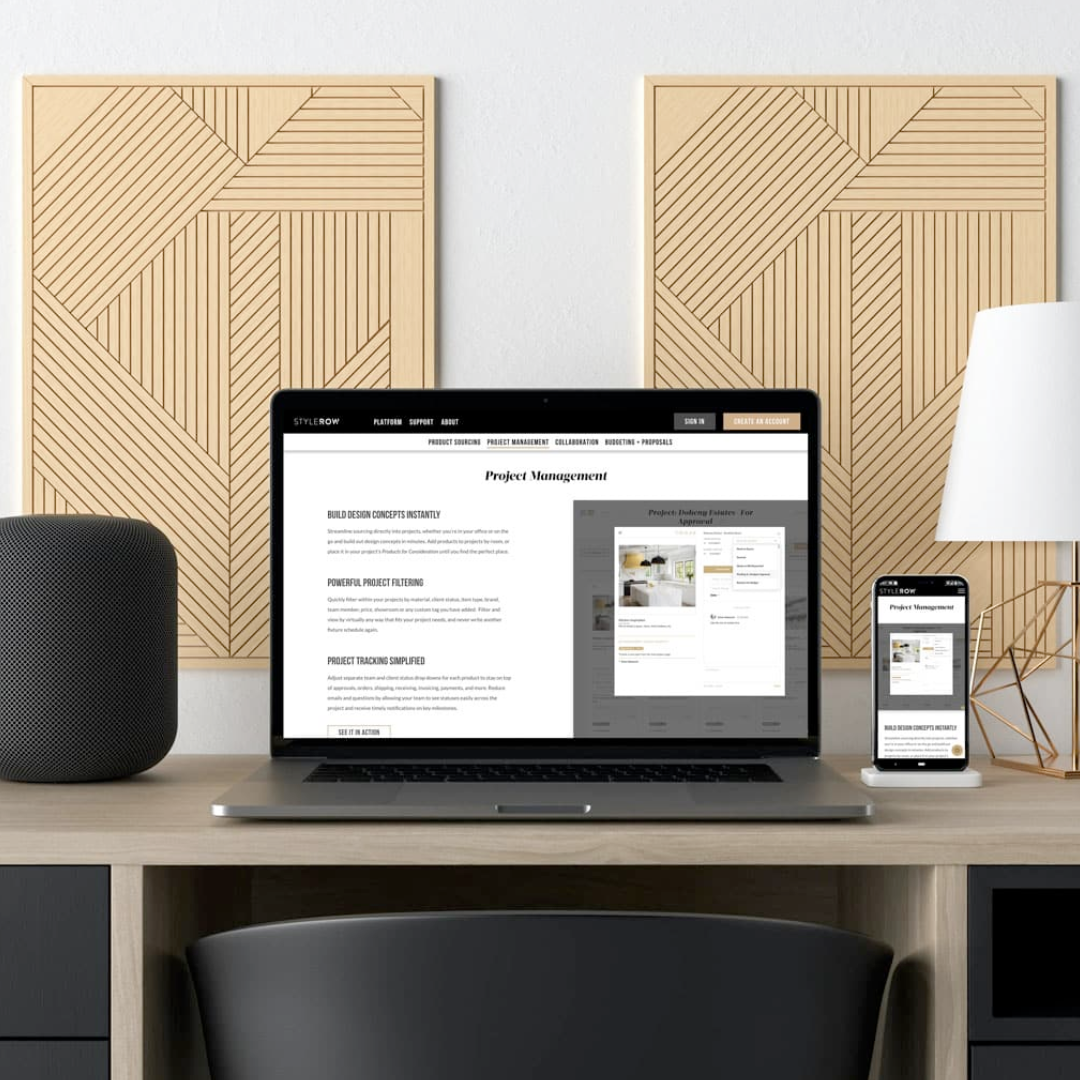
A Deep Dive into StyleRow's Project Management Toolkit

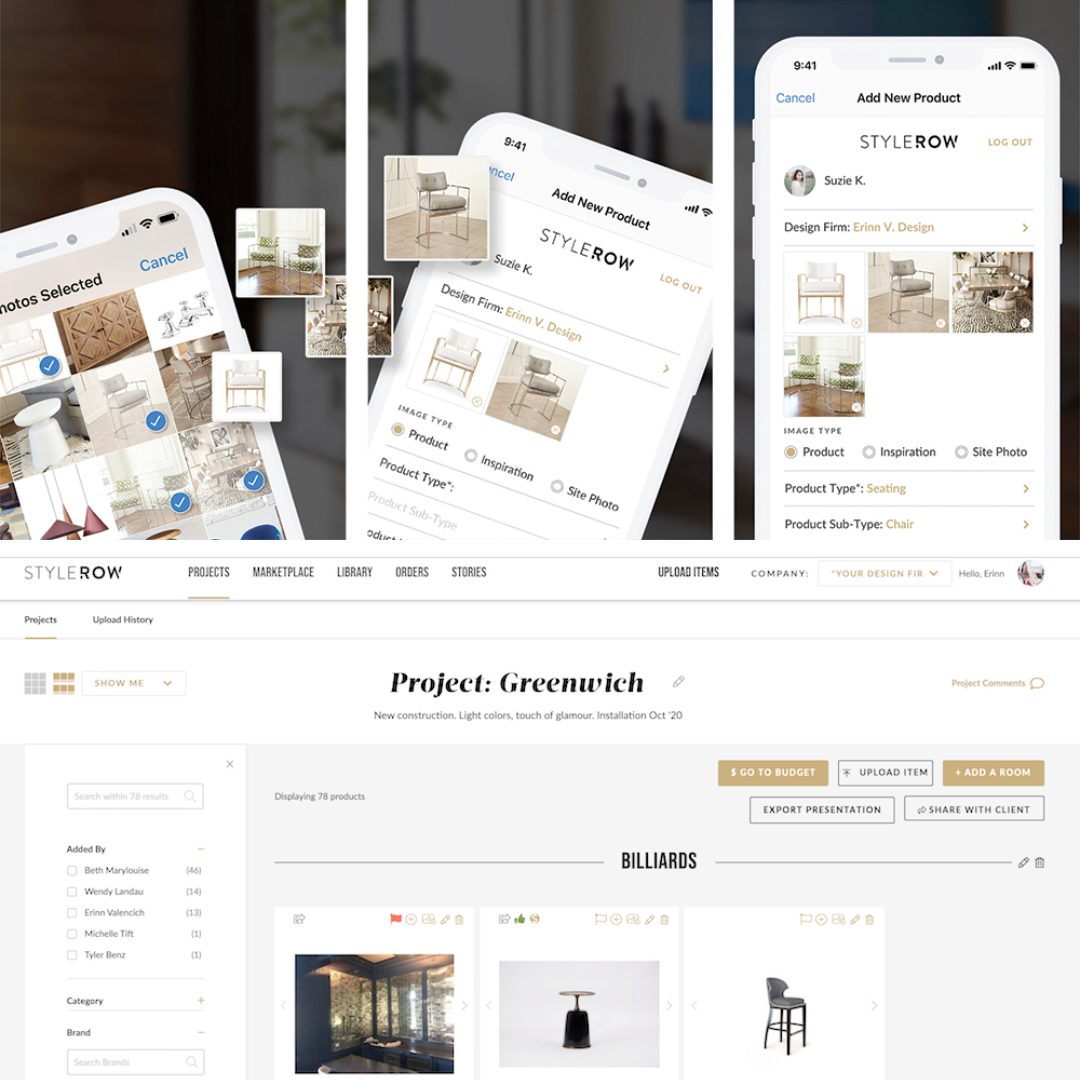
I never miss a chance to discover emerging technologies and innovative software solutions for interior designers, that’s why I recently attended a demo for StyleRow. This platform caters to interior designers, home stagers, developers, and real estate investors, promising an integrated approach to project management that could solve common pain points and redefine your design process. I’m excited to share what I learned and let you see for yourself whether you think StyleRow could be the answer you’ve been looking for.

Connecting Teams, Clients, and Vendors

Communication is the cornerstone of design success, and StyleRow addresses this by providing distinct views for teams, clients, and vendors. This way, you can seamlessly manage task lists and maintain streamlined communication across multiple layers all within the platform.

Streamlined Team Workflow

StyleRow shines particularly brightly in team-based environments. Imagine a scenario where the lead designer compiles a list of required items, which then allows the design assistant to source each of these items seamlessly. This systematic process is meticulously tracked from inception to completion, with the platform sending timely notifications for any updates or revisions.

Centralized Product Information and Progress Tracking

Input all of the essential product information, from pricing to lead times, and keep track of its status with an easy drop-down menu instead of typing out notes each time. Additionally, the Team Messaging tool facilitates real-time progress updates among team members, fostering an environment of collaboration.

Mastering Organization

Simultaneously manage unlimited projects on StyleRow. Inside each project, categorized folders meticulously document every facet, ranging from initial inspiration photos and floorplans to sourcing endeavors. The platform even includes a clipping tool to save products from various vendor and retail sites, all of which can be stored in a master product library. Manage your time with its optional built-in time tracker.

Comprehensive Tools

You can forget about formatting and filling out spreadsheets and doing double work. This is a toolkit for managing every aspect of your projects, from crafting master shipment tracking lists and finish schedules to material schedules and even adding services such as painting.

Empowering Financial Management

StyleRow makes exporting data to Excel or presentation formats a breeze, while the platform's QuickBooks integration facilitates seamless creation of purchase orders and invoices. Moreover, StyleRow provides an embedded budgeting tool to conveniently track client budgets.

Client Dashboard for Enhanced Interaction

StyleRow enhances the client-designer relationship by providing an interactive client dashboard. This dashboard allows clients to view your proposals and sign off on budgets, orders, and more, all through a shared link. As a designer, you retain total control over the information presented, offering a tailored experience for your clients.

Visual and Functional Harmony

Last but not least, the platform is designed in an intuitive and aesthetically pleasing way, which is something that you, as an interior designer, will surely appreciate!

Affordable Pricing

With its wealth of tools and capabilities, StyleRow offers competitive pricing, catering to teams of up to 5 members at $49.99/month and individuals at $29/month or $299/annually.

If you’re curious to see more, check out their introductory video below, book a demo, or take advantage of their 14-day free trial!

xx, Danae



How Virtual Reality Can Help Interior Designers

Interior designers are used to showing their proposals in 2D and 3D images. So, the logical next step is an even more immersive way to help clients better understand your vision and get a better sense of what the space will feel like. This is where Virtual Reality (VR) comes in. Users wear a headset to interact with realistic digital environments, taking design from theoretical and hypothetical to experiential.

Although polished and approachable programs for VR in interior design have not yet reached mainstream markets, a glance at technology news indicates that the industry is rapidly moving in that direction. If you need a sign of the times, Metaverse celebrated the first edition of the Metaverse Architecture and Design Awards (MAD).

So, let’s muse about the potential benefits that VR could offer you as an interior designer, proving that it’s worth staying tuned to its new advancements. By utilizing VR programs, both designers and clients can immerse themselves in 360-degree designed spaces, offering a heightened level of realism and perspective. This opens up possibilities such as:

Unleashing Creative Boundaries:

With VR, designers can explore daring and innovative design directions without the concern of significant time investments, fostering creativity and pushing design boundaries to new heights.

Enhanced Client Engagement:

VR enhances client meetings by providing an immersive experience that brings the space to life. Clients can visualize and feel the design firsthand, leading to better feedback, improved satisfaction, and stronger collaborative decision-making.

Streamlined Material Selection:

VR enables designers to virtually explore a wide range of finishes, textures, and materials. By visualizing these options in VR, designers can save valuable time and money on ordering physical samples, making informed decisions upfront, and reducing the need for costly returns.

Error Prevention and Design Accuracy:

Through immersive VR experiences, designers can identify and address potential design flaws or mistakes. By exploring the space from an immersed perspective, designers understand how different elements come together, minimizing the chances of overlooked details.

Gaining Competitive Edge:

As VR becomes increasingly sought-after by clients, embracing this technology positions interior designers ahead of the competition. Offering immersive experiences sets designers apart and meets the growing demand for cutting-edge design services.

So, are there any downsides to using VR as part of your interior design process? More than drawbacks, you’ll likely face some initial hurdles such as the investment and learning curve. While VR provides immersive visual experiences, it currently falls short in replicating other sensory aspects crucial to interior design, such as touch, smell, and realistic sound propagation.

All in all, VR presents a multitude of exciting advantages and possibilities for the field of interior design. As technology continues to advance, we can look forward to leveraging its capabilities to enhance the design process, create immersive experiences, and push the boundaries of what is possible in designing and visualizing interior spaces.

xx, Danae


DIGITAL TEMPLATES?

We love helping busy interior designers like you! So, in an effort to provide the best resources possible, WE WANT TO HEAR FROM YOU about what templates you’d like to see from us. Browse our current collection of templates here for any you might need or want, and email us at danae@elitedesignassistants.com to let us know what other templates you’d like us to make and have available for instant download! 

Mindset Matters: Affirmations to Help You Thrive as an Interior Designer

As interior designers, our mindset plays a vital role in our daily work and overall success. The way we think and talk to ourselves can significantly impact our mood, creativity, and ability to handle challenges. It's easy to cringe or feel a bit ridiculous when imagining muttering feel-good mantras to ourselves, but let's not forget the harsh put-downs we give ourselves all too easily when we make a mistake or feel inadequate. Amid demanding deadlines, client revisions, and creative blocks, it's easy to get overwhelmed and lose sight of our own worth and capabilities. That's where the power of affirmations comes in. Even if only to counterbalance that negative self-talk, why not give affirmations a try?

Affirmations are positive statements that we repeat to ourselves to cultivate a mindset of confidence, resilience, and success. By incorporating affirmations into our daily routine or using them whenever the need arises, we can shift our self-talk and improve our overall well-being as interior designers. Here are seven examples of powerful affirmations to help you thrive in your professional journey:

"I am a talented and skilled interior designer."

Remind yourself daily that you possess the talent and creativity necessary to excel in your profession. Especially on days when you’re doubting yourself.

“Every setback is an opportunity for growth and learning; I am resilient and adaptable.”

Interior design is a field that constantly presents new challenges. Adopting a growth mindset will enable you to approach these obstacles as learning experiences rather than defeat.

"I am confident in presenting and defending my design ideas."

Confidence is key when it comes to presenting and defending your design choices. Remind yourself that you have the expertise and knowledge to articulate your vision with conviction.

"I am resourceful and find creative solutions to design challenges."

Resourcefulness is a valuable trait for any interior designer. Affirm that you possess the ability to find innovative solutions to design challenges, leveraging your creativity and problem-solving skills.

“I am deserving of success and abundance in my career as an interior designer.”

Believing in your worthiness of success and abundance sets the stage for attracting opportunities and achieving your goals.

"I am grateful for every opportunity to create beautiful spaces."

Gratitude is a powerful mindset tool. Express gratitude for every project and every opportunity to create beautiful spaces. By cultivating a sense of gratitude, you will approach your work with enthusiasm and appreciation, ultimately enhancing the quality of your designs.

"I take care of myself to maintain a healthy work-life balance."

As interior designers, it's crucial to prioritize self-care and maintain a healthy work-life balance. Remind yourself that taking care of your well-being is essential for your creativity and overall success.

There are no hard and fast rules when it comes to affirmations. Feel free to modify the suggestions above or create your own entirely. There are also many different kinds of affirmation audios available on popular platforms like Spotify. The essential aspect is to crystallize the affirming idea you need most and pronounce it (even if it's silently in your thoughts). By adopting these affirmations, you can cultivate a mindset of confidence, resilience, and creativity that will propel you forward in your career. So, next time you’re feeling distraught at your desk, take a deep breath and try an affirmation!

xx, Danae

How to Get the Most Out of Your Interior Photoshoot - 9 Keys

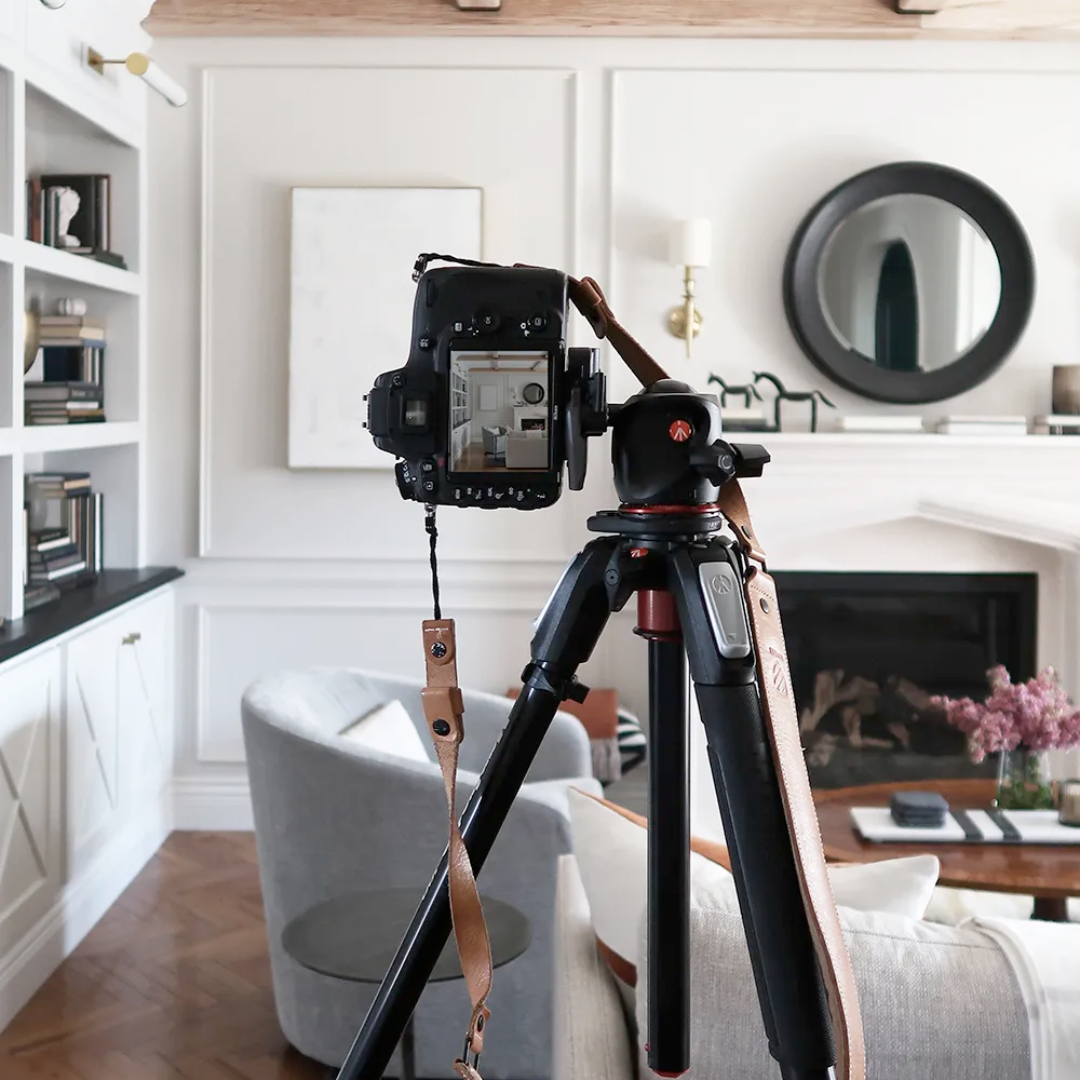
It's not uncommon to develop an emotional attachment to certain projects, homes that you would love to keep as your own. However, all we can keep are the cherished memories and, of course, the photos. And these photos are arguably your most important marketing tool. In this guide, we will explore practical tips and considerations to help you maximize the potential of your interior photoshoots. From preparing clients and hiring a professional photographer to styling techniques and utilizing natural light, we will cover everything you need to know to create captivating images.

1. Set expectations from the start.

Before starting a project, communicate with your clients about the importance of photography and its impact on your portfolio. Ensure their cooperation and discuss any privacy concerns for high-profile clients. Setting expectations early on will help you secure the necessary access and cooperation for a successful photoshoot.

2. Arrange for an empty space.

Whenever possible, schedule the photoshoot when the owners can temporarily vacate the space. This allows you to work without distractions and gives you the freedom to rearrange personal belongings that may not align with the desired aesthetic. Before moving anything, take reference photos of the space as it is, so you can easily restore it to its original state afterward.

3. Hire a professional interior photographer.

While you may have an eye for design, entrusting the photography to a professional specialized in interior photography is highly recommended. They possess the technical expertise, equipment, and knowledge of angles, lighting, and composition that can truly elevate your images. Their experience can help you achieve magazine-worthy shots that increase your chances of publication.

4. Enlist an assistant.

Having an extra set of hands during the photoshoot can be immensely beneficial. An assistant can help with styling, swapping props, and setting up different options quickly, saving you time and ensuring smooth transitions between shots.

5. Come prepared with styling props.

To achieve a polished and inviting look, bring a variety of props that add texture and interest to your photographs. Consider items such as baskets, pillows, throws, freshly cut flowers or branches, vases, coffee table books, and even framed artwork. These props will allow you to create layers and a lightly lived-in feel that resonates with viewers.

6. Share the project's story.

Collaborate with your photographer by sharing the backstory and inspiration behind the design. Understanding the narrative will enable them to capture images that reflect and enhance the project's essence. By creating small vignettes that showcase everyday moments–think a sliced lemon next to a pitcher of lemonade on the kitchen counter–you can infuse the photos with a sense of intimacy and authenticity.

7. Discuss shot variety and formats.

Engage in a conversation with your photographer about the desired shot selection and formats. Discuss the importance of both overview shots to showcase the entire room and close-up shots that capture intricate details. You’ll want options in different formats that serve varying purposes and platforms. Ask for mostly vertical shots (best for magazines and social media) and some horizontal shots for your website.

8. Utilize natural light.

Communicate the orientation of the space and the best time of day for natural light to your photographer. Shoot during the hours when indirect natural light bathes the room, creating a warm glow. Avoid direct sunlight, as it can cause harsh shadows and highlights. Turn off artificial lights to maintain a consistent and natural ambiance. And don’t forget to hide the cords. 

9. Prepare yourself for the long haul.

Photoshoots can be time-consuming, often lasting an entire day or even multiple days for larger projects. Prioritize your comfort by wearing suitable clothing, staying hydrated, and getting ample rest. Fully immerse yourself in the opportunity to capture every aspect of your meticulously designed space.

By following these tips and preparing for the photoshoot well ahead of time, you can ensure that the best of your project is brought out to make a great impression on potential clients and the industry as a whole. So enjoy it!

xx, Danae


DIGITAL TEMPLATES?

We love helping busy interior designers like you! So, in an effort to provide the best resources possible, WE WANT TO HEAR FROM YOU about what templates you’d like to see from us. Browse our current collection of templates here for any you might need or want, and email us at danae@elitedesignassistants.com to let us know what other templates you’d like us to make and have available for instant download!