Top 20 Interior Design Trade Sources

Top 20 Interior Design Trade Sources

Are you looking to elevate your interior design game and gain access to exclusive products and resources? Joining trade programs can open doors to a world of advantages that extend far beyond what's available to the average retail customer. Among these advantages, the most enticing feature is the potential for significant discounts, a substantial part of designers' profits. But the perks don't end there—trade members often enjoy expedited customer service, sales tax exemptions, exclusive product previews, and in many cases, custom design options and expedited shipping services.

Read More

Lights, Camera, Conversation: How Video Marketing Can Drive Your Interior Design Business

Lights, Camera, Conversation: How Video Marketing Can Drive Your Interior Design Business

If you've been paying attention to social media trends lately, you know that video marketing is dominating the digital space. From Instagram Reels to YouTube Shorts, people are consuming more video content than ever before. And guess what? You can absolutely leverage this trend to boost your interior design business. Video content isn’t just for big brands—it’s a powerful tool for interior designers like you to increase visibility, grow your brand, and connect with potential clients. Don’t worry if you’re not a video pro; let’s break it down and see how video marketing can be a game-changer for your design studio in 2025.

Read More

Unwind by Design: Exploring the Role Interior Design Plays in Relaxation

Finding moments of relaxation in our hectic lives is essential for our well-being. As interior designers, we have a unique appreciation for the power a space has to influence our mood and mindset. Beyond creating visually stunning environments, we have the opportunity to design spaces that promote relaxation and comfort, allowing people to unwind and rejuvenate amidst the chaos of everyday life.

The Role of Design in Relaxation:

Designing for relaxation goes beyond aesthetics; it involves thoughtful consideration of layout, lighting, color, texture, and functionality. Each element plays a crucial role in creating an environment that fosters a sense of calm and serenity.

  • Creating Comfortable Retreats: One of the primary goals of interior design is to make spaces feel inviting and comfortable. This means selecting furniture, fabrics, and accessories that not only look beautiful but also feel great to the touch. Plush sofas, cozy throws, and soft pillows can transform a room into a sanctuary where you can unwind after a long day.

  • Harnessing the Power of Nature: Biophilic design, which incorporates elements of nature into the built environment, has been shown to reduce stress and improve overall well-being. Introducing natural materials such as wood, stone, and plants into your designs can evoke a sense of connection to the outdoors, helping to create a peaceful and grounding atmosphere.

  • Balancing Light and Shadow: Lighting plays a crucial role in setting the mood of a space. Soft, diffused lighting can create a warm and inviting ambiance, while gentle shadows can add depth and dimension. Incorporating dimmer switches, candles, and natural light sources allows for greater control over the lighting environment, enabling you to adjust it according to your mood and needs.

  • Promoting Flow and Movement: Clutter and congestion can disrupt the flow of energy within a space, leading to feelings of stress and unease. By designing rooms with clear pathways and functional layouts, you can promote a sense of harmony and relaxation. Thoughtful space planning and organization solutions ensure that each area of the home serves its purpose without overwhelming the senses.

The Importance of Mindful Design:

Mindfulness has gained widespread recognition as a powerful tool for managing stress and promoting mental well-being. Mindful design embraces the principles of mindfulness, encouraging us to approach the design process with intention, awareness, and compassion.

  • Sensory Design: Mindful design engages all the senses, creating spaces that not only look beautiful but also feel, sound, and even smell harmonious. Paying attention to how different materials, textures, and sounds interact can enhance the overall sensory experience and create a deeper connection to the space.

  • Embracing Simplicity: Minimalism is a key tenet of mindful design, advocating for simplicity, clarity, and purposefulness in our surroundings. By decluttering our homes and eliminating unnecessary distractions, we can create environments that promote calmness and clarity of mind.

  • Cultivating Gratitude: Mindful design encourages us to cultivate an attitude of gratitude for the spaces we inhabit. Taking the time to appreciate the beauty and functionality of our surroundings can foster a greater sense of contentment and fulfillment in our daily lives.

As interior designers, we have the privilege and responsibility to shape the environments in which people live, work, and play. By embracing the principles of relaxation and comfort in our designs, we can create spaces that not only delight the eye but also soothe the soul. Whether it's through the careful selection of materials, the thoughtful arrangement of furniture, or the incorporation of biophilic elements, each decision we make has the power to enhance the quality of life for those who inhabit our spaces. So, let’s embrace the role interior design plays in promoting relaxation and comfort, and create environments that nurture and inspire us to unwind, rejuvenate, and thrive.

xx, Danae

Leveraging Billboard Marketing for Interior Designers

In the dynamic world of interior design, where creativity and innovation shape spaces, it's essential for professionals to think outside the box when it comes to marketing strategies. While digital platforms and social media have become go-to tools for many industries, there's a timeless charm and effectiveness in traditional methods. Billboard marketing, with its larger-than-life presence, can be a powerful avenue for interior designers to showcase their talents and attract potential clients in unexpected ways.

I have been reading a lot about how the old ways of marketing that everyone forgot about are coming back and working again because there’s less competition. Think billboards, direct mailers, flyers, etc.

Below you will find ways that billboards can help in your marketing and if you are serious about researching further, check out billboards in your local area or look into a company like Blindspot to see if that is more what you are looking for. With Blindspot you can create a scheduler where your advertising will appear on digital boards. These are only located in certain large cities.

1. Maximizing Visibility:

Billboards offer a unique opportunity to showcase your work to a broad audience. Strategically placed in high-traffic areas or near affluent neighborhoods, these large displays can capture the attention of individuals who might not be actively seeking an interior designer but could be inspired by what they see.

2. Visual Impact:

Interior design is a visual art, and billboards are the ideal canvas to showcase your design aesthetics. High-quality, captivating images of your past projects can create an instant connection with passersby, making them more likely to remember your brand when the need for an interior designer arises.

3. Targeting Specific Markets:

Billboard marketing allows you to target specific demographics by choosing the right locations. For instance, if your specialty is luxury residential design, placing billboards in upscale neighborhoods or near high-end shopping districts can attract clients who appreciate and can afford your services.

4. Storytelling through Design:

Use billboards to tell a story about your design philosophy and process. Incorporate before-and-after images, design sketches, or even quotes that highlight your unique approach. This not only engages viewers but also gives them insight into your creative process, fostering a connection with your brand.

5. Promotional Campaigns:

Consider running special promotions or limited-time offers exclusively promoted on billboards. This can create a sense of urgency and encourage potential clients to reach out sooner rather than later, driving business to your doorstep.

6. Integrate Digital Elements:

Incorporate QR codes or unique hashtags on your billboards that lead to your online portfolio or social media profiles. This bridges the gap between traditional and digital marketing, making it easier for potential clients to explore more of your work and contact you directly.

7. Collaborate with Local Businesses:

Forge partnerships with local businesses to display your billboards on their premises. This cross-promotion can be mutually beneficial, increasing your reach and visibility within the community.

8. Measure and Adapt:

Utilize analytics tools to measure the impact of your billboard campaigns. Track website visits, social media engagement, and client inquiries to understand the effectiveness of your strategy. Use this data to refine your approach and make informed decisions for future campaigns.

While digital marketing is undoubtedly crucial in today's landscape, traditional methods like billboard advertising can add a tangible and memorable dimension to your marketing mix. By strategically leveraging the visual appeal and reach of billboards, interior designers can make a lasting impression and turn heads, ultimately translating into new clients and exciting design opportunities.

Happy Advertising!

xx, Danae

A Biltmore Christmas

Disclaimer: I am a Hallmark nerd!

I am so excited to write this post I can hardly sit still. I sat down to write this and then had to run an unexpected errand and it was as if I was a child on Christmas morning waiting patiently for my mother to get her coffee so my siblings and I could start ripping open perfectly wrapped packages. Finally, I’m back at my desk.

Not only am I a huge fan of the Biltmore Estate, the iconic American estate located in Asheville, North Carolina, but I am a huge fan of Hallmark Christmas movies. Over the years they have become more clever, more humorous, and overall, more enjoyable. Last year they filmed one of my beloved Christmas movies at the Biltmore and it airs this year on November 26 on Hallmark.

I first learned about the Biltmore House in interior design school and whether you were formerly taught or self-taught I just assume that every interior designer knows about the Biltmore, just as they know about Frank Lloyd Wright or David Hicks.

But if you are unfamiliar - The Biltmore was built in 1889-1895 by the Vanderbilt family. It is a 250-room French Renaissance chateau with a backdrop of the Blue Ridge Mountains. The house contains over four acres of floor space, including 35 bedrooms, 43 bathrooms, and 65 fireplaces.

The 8,000-acre property is now a one-of-a-kind destination and besides the mansion, includes an art exhibit, a winery, dining, shopping, 20+ miles of nature trails, and a hotel. You can truly experience the magic of the Biltmore for days at a time if you desire.

Visiting the Biltmore around the holiday season is a bucket list item of mine and this year not only is A Biltmore Christmas airing on Hallmark, but a mini-documentary called “Behind the Magic” aired and debuted November 2 on YouTube.

A Biltmore Christmas stars Bethany Joy Lenz (loved her in One Tree Hill and other Hallmark Christmas favorites such as An Unexpected Christmas with my Hallmark boyfriend, Tyler Hynes) and Kristoffer Polaha (he’s one of my favorite Hallmark leading men after… did I mention Tyler Hynes?).

Bethany as Lucy Hardgrove, a modern-day screenwriter, and Polaha as Jack Huston, the lead in a beloved holiday movie His Merry Wife!, first filmed at the Biltmore House in 1947 star in this magical, time-traveling, historical Christmas movie. In the film, the classic movie, His Merry Wife! is scheduled to be re-filmed at the iconic estate, but a mysterious hourglass intervenes, and Lucy is transported back in time to 1946 as the cast and crew prepare to re-make the classic movie. So, this is a Christmas movie, within a Christmas movie re-make of a Christmas movie … I think.

Some fun facts about the movie from the Biltmore website:

  • 8 vintage cars were used during the film.

  • 200 yards of artificial snow were used.

  • 9 rooms inside the Biltmore were used for filming.

  • 4 of the 9 rooms were decorated with a 1940s theme.

  • 2 exterior locations directly attached to the Biltmore House were used for filming scenes, including The Loggia and the Library Terrace.

  • 4 rooms in The Inn on Biltmore Estate (the onsite hotel) were used as film sets.

  • 11 costumes were worn by Bethany Joy Lenz.

Super fun facts about Christmas at the Biltmore:

  • The banquet hall alone features 500 lights, 500 presents, and 500 ornaments.

  • 67 decorated Christmas trees inside Biltmore House.

  • The largest tree inside the house is a 35-foot-tall Fraser fir that requires 50 staff members to carry in, raise and secure.

  • 45 additional decorated Christmas trees are at other estate locations.

  • 45,000 lights and 282 candles inside the home.

  • Another 850,000 lights across the rest of the estate.

  • There are 13,870 ornaments used on the trees inside the home.

  • More than 1,960 traditional poinsettias are found throughout the estate.

  • 238 fresh wreaths and sprays along with 90 faux pieces are used across the estate.

To learn more about Biltmore House, click here.

To watch the mini-documentary, click Behind the Magic - Biltmore

To watch A Biltmore Christmas, tune into the Hallmark Channel on Sunday, November 26 at 7:00 p.m. CST.

It’s been over a year since I learned that they were filming this movie and I have waited not so patiently since then to watch it. I just hope it lives up to the magical experience that I’ve created in my head. I should probably do a review … stay tuned for a future post about my thoughts on the movie. Yikes, the pressure is on you, Hallmark!

If you are looking for a fun destination, you should look into the Biltmore Estate if you haven’t been. I know I’ll be calling up my girlfriends and booking a trip soon!

Happy Holidays!

xx, Danae

Unique Items Designers Should be Sourcing from Flea Markets

You've nailed down the practical aspects of your design project—the layout, the mood, and all the essentials. But what about adding that extra touch, a piece that stands out, that becomes the focal point of your client's space and remains etched in their memory? Sometimes, the answer doesn't lie in the aisles of big-box stores or the price tags of lavish vintage boutiques. No, you need to venture into a world of hidden treasures—the flea market. Not only do these pieces steal the show, but they also come with an eco-friendly and budget-conscious tag. But, what kind of items are best sourced from a flea market? Let's dive in!

Light Fixtures

Lighting can transform a room's ambiance and personality, and the flea market is a treasure trove of distinctive fixtures. Unearth retro lamps, chandeliers, or sconces that infuse character into your space. Just remember to have your electrician give them the once-over for safety's sake.

Mirrors

Mirrors are more than just reflective surfaces; they are statement pieces that play with light and space. While you're likely familiar with the concept, a vintage mirror can take your design to a whole new level. The little imperfections, wear, and signs of age can give it an added layer of charm and character.

Artwork

Flea markets boast an eclectic array of artwork from various eras and styles. You can juxtapose a vintage piece with a modern frame for a striking contrast, or keep the ornate frames for a touch of sophistication. If you have a keen eye, you might even score a valuable piece at a fraction of its worth.

Decorative Objects

Want to add a personal touch that sparks conversations? Flea markets offer quirky collectibles, from vintage cameras to antique globes. Your clients will appreciate the nostalgia these items bring to their space.

Tableware

Elevate your client's dining experience with vintage tableware. Delicate teacups and elegant silverware are waiting to be discovered, letting you create a dining setting that exudes extraordinary flair. Mix and match for a bohemian vibe or aim for a more cohesive, vintage look.

Hardware

Cabinet and drawer pulls and knobs usually age gracefully, and their unique shapes and designs can revamp the appearance of an otherwise basic piece of furniture, allowing you to “upcycle” even the simplest items.

Salvaged Architectural Elements

Flea markets are where you'll stumble upon architectural salvage pieces like ornate doors, stained glass windows, vintage mantels, wooden beams, and wrought-iron railings. Incorporating these elements into your designs adds a layer of history and craftsmanship that's impossible to replicate with new materials.

Reclaimed Wood Furniture

There's an undeniable charm to furniture with a backstory. Reclaimed wood tables, chairs, and cabinets are eco-friendly and brimming with character. Look for pieces with good bones that might need some TLC—sanding and a fresh coat of paint or stain can transform them into custom pieces your clients will adore.

Now that you're itching to explore the world of flea markets, here are a few tips for successful shopping:

  1. Do Your Research: Know when and where the best flea markets in your area take place. Some markets specialize in specific items, allowing you to tailor your search for the perfect finds.

  2. Inspect Thoroughly: Examine potential purchases carefully for any damage or signs of wear. If you're considering a significant buy, consider bringing along a knowledgeable friend or even having a professional inspection.

  3. Negotiate Smartly: Don't be shy about bargaining; it's all part of the flea market experience. Be polite but firm in your negotiations. Sellers often expect a little back-and-forth, so you might just score a better deal.

Happy Hunting!

xx, Danae

The Correlation Between Well-Being + Design: 9 Ways to Make a Difference

We're obviously all about killer aesthetics, but today, we're taking a deeper dive into how your interior designs can do more than just create a visually stunning space. We're talking about the magic that happens when your designs positively affect the health, happiness, and overall well-being of those who inhabit them. It's incredible how much of a difference you can make in their lives. So, let's explore some ways you can make that happen!

1. Light and Color

You're probably no stranger to the idea that colors can set the mood – warm hues like reds and yellows bring vibrancy and energy, while serene blues and greens offer calm and relaxation. But it doesn’t stop there! Natural light during the day helps us sleep better at night and keeps our spirits high during waking hours. So, when we design with light and color in mind, we are creating environments that influence how we feel and sleep.

2. Acoustics

Acoustics in design are the secret sauce for privacy and peace. A well-designed acoustic environment not only shields you from outside noise (and keeps noise in) – it allows for the beautiful symphony of life to coexist within your space. Kids playing in the living room can cohabitate with a parent working from home. So, acoustics aren't just about keeping it quiet; they're about creating a versatile and harmonious living experience.

3. Technology

We all love our tech gadgets, right? They bring us convenience, entertainment, and even safety. But sometimes, we need a break from the digital world. Imagine a hidden TV or a cozy tech-free corner where you can unwind without the constant buzz of screens. It's the yin and yang of our tech-driven lives. Striking this balance ensures that the space doesn't just serve digital needs but also the need for some good old-fashioned human connection and relaxation.


4. Harmony and Flow

A well-organized space prevents clutter and visual chaos to give your mind some breathing room. And thoughtful layouts and furniture placement go beyond functionality; they promote mental clarity and an overall feeling of serenity. In essence, it’s as they say: a tidy space equals a tidy mind.

5. Ergonomics

Furniture is more than a pretty prop; it can be your body's ally. Well-designed furniture knows how to keep your posture in check and your joints happy. With lumbar support in chairs, desks that adjust to your liking, and mattresses that cradle you just right, it's all about keeping you physically content.

6. Biophilic Design

Living with biophilic design is a way of tapping into your primal connection to the natural world with science-backed health perks. Imagine bringing the outdoors in – with plants, natural materials, and calming green views. It's like a mini-vacation for your senses. Studies show that this connection to nature reduces stress, boosts cognitive function, and makes you feel all-around awesome.


7. Accessibility and Inclusivity

One person’s happy place might look a little different from the next. Think of an environment that welcomes all abilities and needs, where everyone feels like they belong. It's about creating spaces that everyone can readily access – whether that means installing ramps, wider doorways, or sensory-friendly design – and enjoy.

8. Sustainability

Sustainability might sometimes feel like a concept that is separate to us, but it's actually a reflection of our well-being and our home planet's health. Sustainable materials improve the air quality in our homes, reduce our carbon footprint, and nudge us towards a more eco-conscious lifestyle. It's about being responsible stewards of our environment, ensuring well-being for generations to come.

9. Personalization

When you dive into personalization, remember that beyond aesthetics, it's about designing a space that celebrates the inhabitant’s uniqueness, sparks their joy, and serves as the stage for the kind of lifestyle they want for themselves. And a place like that certainly contributes to happiness and well-being.


Balancing all these elements and seamlessly integrating them into your designs can be a lot – never mind juggling invoices and lead times. But through your dedication to placing these elements at the forefront of your creative process, you enrich the lives of those who inhabit your designs. And that’s something you can be very proud of as a designer!

xx, Danae

Diverse Design Niches with Elite Design Assistants

At our core, we're more than just a team of talented assistants. We're a diverse group of professionals with an array of specialties ranging from Drafting and 3D Rendering to Project Management, Social Media Management, and Bookkeeping. But what you may not know is that many of our Virtual Design Assistants (VDAs) also have expertise in various design niches! Let's explore some of these niches and the kinds of tasks our VDAs are ready to assist you with:

Residential Design

At Elite Design Assistants, you'll find experts in optimizing space layouts and selecting color palettes, materials, and furnishings. They also bring your ideas to life through detailed drafting and immersive 3D visualizations.

Commercial Design

Count on our assistants to craft innovative and captivating retail spaces, seamlessly integrate corporate branding, and manage every aspect of project coordination for a successful outcome.

Hospitality Design

Our team includes professionals who can help you with conceptualizing themes for hotels, restaurants, and bars. They excel in curating custom furniture and decor, enhancing guest experiences through thoughtful design, and effectively managing budgets.

Construction

We offer expertise in reviewing plans, meticulously documentation, ensuring top-notch quality control, managing schedules, and sourcing materials at competitive rates.

Tiny Home Design

For those seeking compact living solutions, we have experts in ingenious space optimization, creative storage solutions, functional traffic flow, and the incorporation of sustainable materials, which is often a key aspect of tiny home design.

Airbnbs and Short-Term Rental Design

Chat with your VDA about how to elevate your short-term rental spaces. They shine when it comes to interior styling to attract guests and offer strategic recommendations for guest-friendly amenities and decor.

Long-Term Rental Design

Elite Design Assistants brings you specialists in designing spaces with long-term tenant comfort in mind, and they suggest updates to enhance rental value to make the rental a low-hassle, profitable venture for you.

Value-Add Projects

We have professionals who are experienced in enhancing property values through cost-effective renovations. They offer budget-conscious renovation ideas, high ROI improvement suggestions, and provide dependable project management for value-adding renovations.

Historical/Heritage Preservation

We have assistants who are well-versed in preserving historical homes or buildings. They specialize in respecting period-appropriate design while harmoniously incorporating the best and newest design trends.

Corporate Office Design

Within our team, you'll find VDAs who excel in designing modern, ergonomic workspaces. They integrate brand identity into interior elements and select office furniture that aligns with your vision.

Co-Working Space Design

Our assistants are skilled in crafting flexible and collaborative workspaces. They suggest amenities that foster community, offer flexible design solutions, and implement strategies to attract and retain tenants.

Cannabis-Related Projects

We have VDAs who are in the know about the evolving cannabis industry and specialize in designing contemporary, compliant, and inviting spaces.

Smart Home Design

Gain valuable insight and assistance with home automation or domotics, smart lighting, security systems, and user-friendly interfaces to create the ultimate modern living spaces.

E-Design

Our VDAs can virtually transform spaces, create inspiring mood boards, and curate detailed shopping lists to bring your vision to life with ease.

No matter your unique design niche, we're here to support you in your work. Whether you need assistance with administrative tasks or require a dedicated partner to help you bring your design visions to life, reach out to us, and we'll match you with a Virtual Design Assistant who is the perfect fit for your project. Your success is our priority, and we're excited to be a part of your design journey.

xx, Danae

Green & Gorgeous: 23 Eco-Friendly Vendors You Should Know About

Interior designers wield a unique power to shape a healthier planet through their design choices. From sustainable materials to energy-efficient solutions, every decision in the design process can contribute to a greener, more sustainable future. So, I’ve been on the hunt for vendors that supply products that are non-toxic, ethically and sustainably sourced, and overall better for the earth and its inhabitants–while still being stunning! Here are my findings.

Furniture

The era of fast furniture is on its way out. Offer your clientele high-quality pieces that distinguish themselves through superior, non-toxic, and ethically derived materials. Make choices that resonate with our collective well-being and are engineered for lasting durability.

Maiden Home, a woman-founded brand, offers an array of sustainable and ethically sound furniture, which, in addition, boasts an incredibly stylish and timeless aesthetic.

West Elm uses a glossary of symbols to indicate the fair trade, handcrafted, and sustainably sourced attributes of their products, helping you make informed sourcing decisions.

Medley specializes in crafting exquisite sofas, beds, and other furnishings using domestically sourced hardwoods from forests certified by the FSC (Forest Stewardship Council) and solid bamboo, placing ethical craftsmanship at the forefront.

The Citizenry showcases a delicious assortment of ethical furniture created from thoughtfully selected quality materials like vegetable-tanned leather, solid wood, and linen, alongside decorative pieces.

You may know Etsy for things like monogrammed gifts, but more and more sellers who reclaim and upcycle furniture are diversifying their unique offerings, and it’s a great way to support small businesses.

Textiles

Look for textiles created using environmentally conscious methods, including the use of sustainably sourced materials like organic cotton, hemp, or recycled fibers, and gentle dyes.

MadeTrade offers a whole host of “ethical, sustainable, and beautiful” furniture, decor, and textile items, including bedding and rugs.

Armadillo introduces minimalist, elegantly designed rugs crafted from sustainable materials such as wool and jute, proudly holding the distinction of being a Certified B Corporation™️.

Minna, another certified B Corp, collaborates with artisans from Central and South America to create exquisite home goods utilizing traditional techniques and vintage, as well as natural textiles.

Lorena Canals presents a stunning collection of non-toxic, machine-washable area rugs handcrafted by artisans in northern India who exclusively use recycled and natural fibers and non-harmful dyes.

Lighting

The notion of sustainable lighting implies the use of energy-efficient LED light bulbs, materials derived from local and natural sources, or repurposed and recycled materials.

Schoolhouse specializes in crafting enduring, energy-efficient products for various areas within homes, spanning fans, clocks, and lighting fixtures.

Stickbulb offers lighting systems which are crafted from sustainable materials locally sourced from the greater southern New York region, resulting in a sleek, minimalistic collection of fixtures.

Sin has a fascinating terracotta and stoneware collection, while klaylife has clay beaded lighting created by a community of women in Kwazulu-Natal, South Africa.

Flooring

More environmentally conscious flooring options may involve sustainable materials such as wood, stone, recycled glass, natural linoleum, or even cork. Traditional flooring can introduce VOCs (volatile organic compounds) into the air, including known and suspected carcinogens like formaldehyde and benzene.

Interface provides a range of flooring solutions encompassing luxury vinyl tiles and carpet tiles, all of which carry a series of certifications endorsing their eco-friendliness.

Aged Woods collaborates with designers to achieve visually striking reclaimed wood flooring.

True to its name, Sustainable Flooring offers diverse sustainable flooring alternatives, from cork to bamboo.

Paint

Eco-friendly paints exhibit minimal or zero presence of toxins and VOCs, promoting both human health and environmental well-being.

Benjamin Moore has their Eco Spec line with zero VOCs and zero emissions.

Sherwin Williams has a couple of Zero VOC Interior Latex options within their ProMar line.

ECOS Paints delivers non-toxic, Zero VOC paints for a wide variety of applications, including an Air Purifying Paint.

Portola Paints offers both Low and Zero VOC paints, depending on the finish.

Wall Finishes

Opt for wall finishes without harmful chemicals, and that leave a minimal environmental footprint throughout their lifecycle.

Burke Decor carries a large number of eco-friendly wallpapers under their own name, as well as from several other manufacturers.

Tile Club has numerous recycled glass tile options to choose from.

Naturewall is an FSC® accredited business offering wallcovering solutions such as reclaimed wood planks and panels, among others.

Many of the above-listed vendors also carry eco-friendly items in other categories, so I would encourage you to look around each website. I hope I’ve helped to prove that it’s possible to choose environmentally kinder options without sacrificing style. It’s a win for all of us!

xx, Danae

A Deep Dive into StyleRow's Project Management Toolkit

I never miss a chance to discover emerging technologies and innovative software solutions for interior designers, that’s why I recently attended a demo for StyleRow. This platform caters to interior designers, home stagers, developers, and real estate investors, promising an integrated approach to project management that could solve common pain points and redefine your design process. I’m excited to share what I learned and let you see for yourself whether you think StyleRow could be the answer you’ve been looking for.

Connecting Teams, Clients, and Vendors

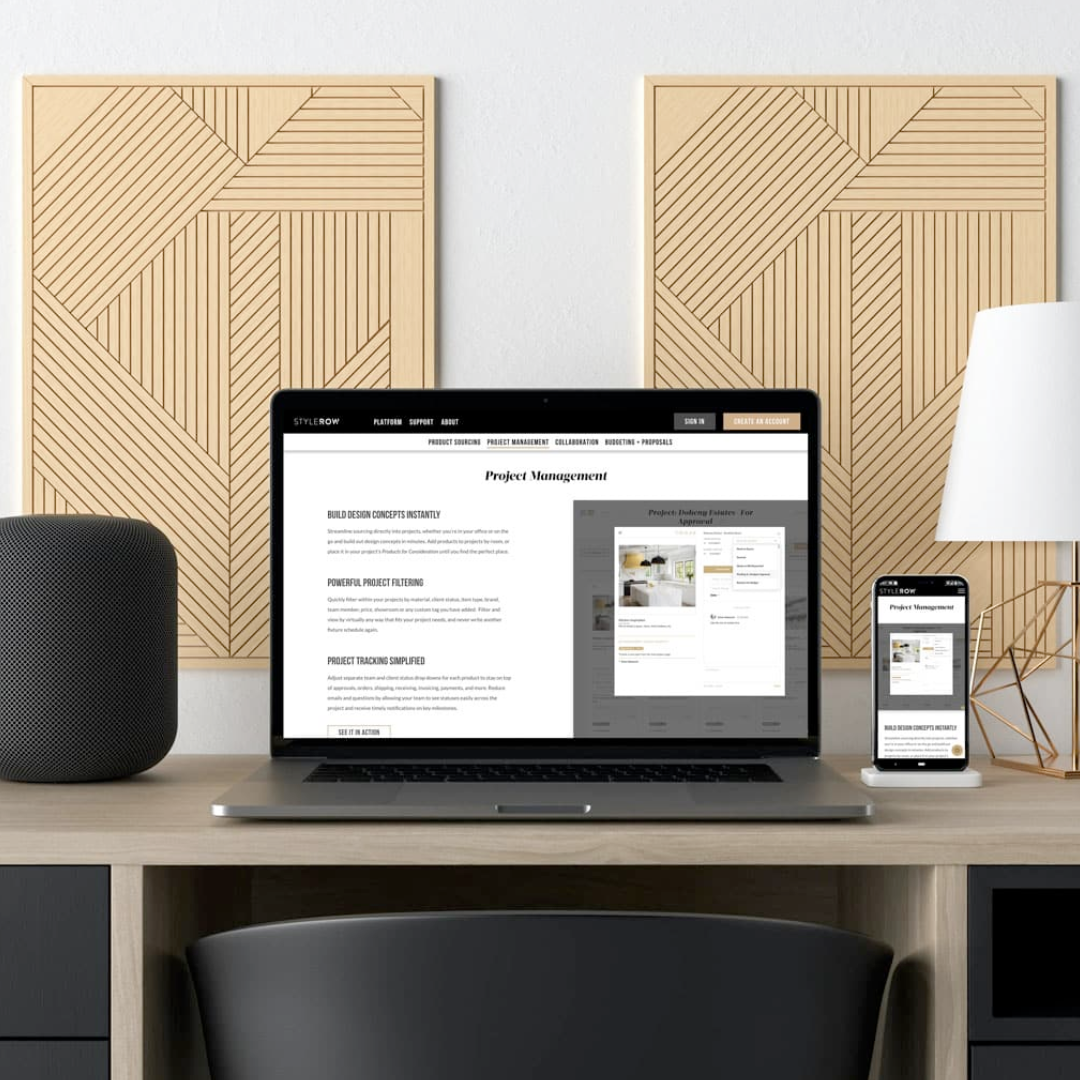
Communication is the cornerstone of design success, and StyleRow addresses this by providing distinct views for teams, clients, and vendors. This way, you can seamlessly manage task lists and maintain streamlined communication across multiple layers all within the platform.

Streamlined Team Workflow

StyleRow shines particularly brightly in team-based environments. Imagine a scenario where the lead designer compiles a list of required items, which then allows the design assistant to source each of these items seamlessly. This systematic process is meticulously tracked from inception to completion, with the platform sending timely notifications for any updates or revisions.

Centralized Product Information and Progress Tracking

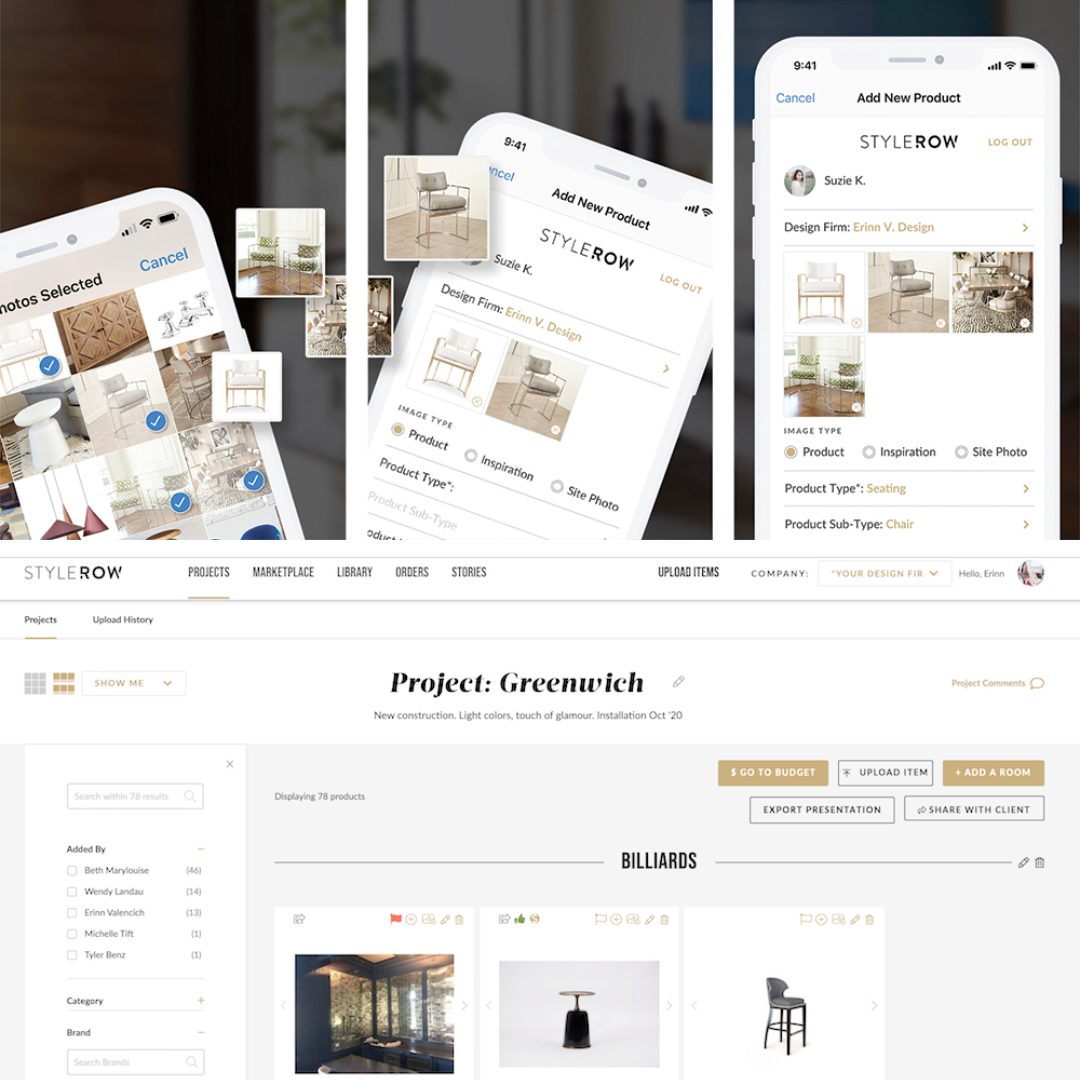
Input all of the essential product information, from pricing to lead times, and keep track of its status with an easy drop-down menu instead of typing out notes each time. Additionally, the Team Messaging tool facilitates real-time progress updates among team members, fostering an environment of collaboration.

Mastering Organization

Simultaneously manage unlimited projects on StyleRow. Inside each project, categorized folders meticulously document every facet, ranging from initial inspiration photos and floorplans to sourcing endeavors. The platform even includes a clipping tool to save products from various vendor and retail sites, all of which can be stored in a master product library. Manage your time with its optional built-in time tracker.

Comprehensive Tools

You can forget about formatting and filling out spreadsheets and doing double work. This is a toolkit for managing every aspect of your projects, from crafting master shipment tracking lists and finish schedules to material schedules and even adding services such as painting.

Empowering Financial Management

StyleRow makes exporting data to Excel or presentation formats a breeze, while the platform's QuickBooks integration facilitates seamless creation of purchase orders and invoices. Moreover, StyleRow provides an embedded budgeting tool to conveniently track client budgets.

Client Dashboard for Enhanced Interaction

StyleRow enhances the client-designer relationship by providing an interactive client dashboard. This dashboard allows clients to view your proposals and sign off on budgets, orders, and more, all through a shared link. As a designer, you retain total control over the information presented, offering a tailored experience for your clients.

Visual and Functional Harmony

Last but not least, the platform is designed in an intuitive and aesthetically pleasing way, which is something that you, as an interior designer, will surely appreciate!

Affordable Pricing

With its wealth of tools and capabilities, StyleRow offers competitive pricing, catering to teams of up to 5 members at $49.99/month and individuals at $29/month or $299/annually.

If you’re curious to see more, check out their introductory video below, book a demo, or take advantage of their 14-day free trial!

xx, Danae