Unpacking Your Interior Design Contracts: 14 Points to Include

If you’re reading this, chances are you're seeking assurance that your interior design contract covers all the critical bases. And you do well to check, because having a meticulously crafted contract serves a dual purpose: it not only forges a shared understanding of the design journey with your client but also safeguards your company from potential liabilities.

Some interior designers may be tempted to skip or simplify contract terms to maintain a more friendly rapport with clients. However, this is a misstep. Interior design projects involve significant financial, time, and emotional investments. When unexpected issues arise, tensions can escalate rapidly, and the stakes are high. Therefore, leaving nothing to assumptions and creating a thorough agreement between you and your clients is fundamental. 

While you can readily find some great interior design agreement templates online, the best course of action is to consult with a lawyer to review the terms and ensure that your contract holds legal validity. Ultimately, you are responsible for your contract's terms, so here are some (but not all!) points to consider when crafting your interior design contract:

  1. Scope of Work: Clearly define the project's full scope, listing what is (and isn't) included. Specify details about revisions and the number of site visits included.

  2. Project Phases: Provide a breakdown of the project stages, which may encompass pre-design, design development, contract drawings, construction oversight, and project finalization.

  3. Intellectual Property: Determine ownership of intellectual property, including copyright ownership of drawings.

  4. Fee and Payment Schedule: Define your fees and payment structure, including hourly rates for tasks outside the scope and invoicing and payment terms (including late fees).

  5. Pricing: Clarify that you do not guarantee prices for goods or services, as they may change beyond your control.

  6. Contractors: State that you are not responsible for services provided by contractors or consultants, requiring clients to sign separate agreements.

  7. Purchasing and Procurement: Specify terms regarding deposits or full payments before purchasing on the client's behalf and liability for delivery times or conditions.

  8. Refunds: Address policies regarding non-refundable purchases and shipping charges, custom-made items, and reimbursements when vendors do not offer refunds or orders are canceled.

  9. Delays: Incorporate provisions for delays attributable to the designer, client, contractors, or circumstances of force majeure.

  10. Termination: Include a clause allowing the client to terminate the contract, with responsibility for outstanding fees and charges.

  11. Reimbursable Costs: Detail costs such as samples, storage, and travel.

  12. Insurance: Specify the client's responsibility for insurance coverage on furnishings and materials during handling, movement, and installation.

  13. Photographing Completed Projects: Gain client consent to photograph their homes before and after design work for your business portfolio and marketing purposes.

  14. Indemnities: Seek legal counsel to confirm the choice of law, arbitration, termination, modification, integration, and nonpayment clauses, tailored to your jurisdiction's laws.

Beyond the content of the contract itself, it's a good idea to walk clients through it step by step and grant them ample time to review it at their own pace. This approach eliminates doubts and ensures everyone is comfortable with the agreement before proceeding.

Remember, presenting a more detailed contract showcases your professionalism, and clients who are put off by the terms may signal potential issues. In the end, having a comprehensive contract will pay off, and you'll be grateful you took the extra steps to protect your business!

xx, Danae

See below for some additional resources you may find interesting as you outline your contract:

ASID Commercial and Residential Contract Packages

HouzzPro’s “Free Template: Interior Design Contract & Guide”

Nancy Ganzekaufer and Attorney David Adler on “Contracts That Protect” 

Join the Conversation: Bridging the Gaps in Interior Design Software

Whether you're a seasoned industry expert or a budding designer, the demand for comprehensive software solutions is on the rise. Despite the availability of numerous popular platforms, there persists a longing among interior designers for a system that bridges the functional gaps and takes their productivity to new heights. As an advocate for enhancing the industry, I believe it's time to initiate a meaningful conversation and identify the missing pieces. By doing so, we can inspire developers to bridge these gaps and create the ultimate all-in-one solution that seamlessly integrates project management and administrative features, meeting the common functional needs sought after by designers like you.

I invite you to explore this (surely incomplete) list of functions that I repeatedly hear designers seeking in a project management program. What would you add?

  • Task Tracking

  • Time Tracking

  • Procurement Tracking

  • Project Timeline & Milestones

  • Team Communication

  • Client Communication

  • Vendor Portfolio

  • Material & Product Library

  • Clipper Tool Extension

  • Design Resource Library

  • File Storage

  • Moodboard & Presentation Creation

  • 2D & 3D Drawing

  • Budget Tracking

  • Template Creation

  • Invoicing & Purchase Orders

  • Bookkeeping

  • Performance Analytics

  • Mobile App Compatibility

And to think these are just some of the many moving parts that designers juggle behind each beautiful project! Beyond these crucial functions, I often come across shared grievances from designers concerning the project management program they utilize. Do any of these hit close to home for you?

  • Poor User Interface (UI) Design

  • Limited Integration

  • Complexity and Learning Curve

  • Limited Collaboration and Communication Features

  • Insufficient Customization

  • High or Inflexible Pricing Plans

  • Unreliable Customer Support

Calling all the visionary minds shaping the industry! It’s time to share your thoughts on the improvements and features you would like to see in interior design software. If you would like to participate in our questionnaire, feel free to draw inspiration from the points above that ring true for you or add your own unique insights. We’d love to hear from you!

TAKE OUR BRIEF SOFTWARE QUESTIONNAIRE

We eagerly await your insights and thank you for being a part of this journey towards innovation and excellence in the interior design industry!

xx, Danae

Feel Joy, Balance, and Abundance in Your Business with The Interior Design Standard

As you know, Elite Design Assistants takes pride in providing helpful tips, information, and resources to you about the interior design industry that will help you succeed in running the most fulfilling and profitable business possible. That’s why we want to share The Interior Design Standard with you! 

It’s time to get your structure and mindset in place so that you can fully step into your confidence as an entrepreneur. The Interior Design Standard is the ONLY program that provides a turnkey business model for a wildly profitable design firm.  

The Interior Design Standard was created by Sandra Funk, CEO and Creative Director of House of Funk, a boutique interior design and renovation firm that has award-winning designs featured in publications such as Elle Décor, House Beautiful, The Huffington Post, Aspire Design and Home, and Luxe Interiors + Design. 

WHY IS THE INTERIOR DESIGN STANDARD FOR YOU?

With hundreds of designers saying the Standard has changed their lives, we wanted to break down why you should be looking at this program. It’s for you if…

  • You’re tired of all the different ways of doing business and you’re ready for ONE tried and true business model that both you and your clients will love. 

  • You’re stuck in the day-to-day tasks and lack the systems and processes to get your team running like a well-oiled machine while you’re out landing dream clients. 

  • You’re looking for a trusted advisor to give you the step-by-step process that’s been tested over a 20+ year career and by hundreds of designers. 

If any of the above resonates, The Interior Design Standard is for you!

WHAT’S INSIDE THE INTERIOR DESIGN STANDARD?

Delivered in a friendly digital format, this program enables you to digest and implement at your own pace because you have lifetime access! The program includes 6 modules showing you all the things you need to take your business from surviving to thriving. 

Modules Include: 

  • Module 1: Master the Tech to Catapult Ahead

  • Module 2: Confidently Price Your Services for Ideal Clients

  • Module 3: Attract & Land Ideal Clients

  • Module 4: Scale with Streamlined Processes

  • Module 5: Improve Your Buying Power & Trade Relationships

  • Module 6: Develop Your Dream Team

Editable process and contract templates along with live virtual community events, access to the ultimate design community: the Standard Inner Circle, and 4 expert lessons make this program AMAZING!

Expert Lessons Include: 

  • Budgeting for Profit with Peter Lang of the Designer CPA

  • Mindset Matters with Jordan Gill of Systems Saved Me

  • Closing the Sale with LuAnn Nigara of A Well-Designed Business

  • Automation for Success with Nicole Heymer of Glory & Brand

STILL THINKING ABOUT IT? 

Maybe you desire to work with fewer, larger projects, to break into your dream market, or to finally set up systems. Whatever your reason, if you’re determined to transform your firm into a thriving interior design business that will run so efficiently that you will have time to do what you love (the design part!), this program is for you! 

AN ELITE BONUS

Any NEW designer who signs up using my link will receive 5 FREE HOURS of Admin Services from Elite Design Assistants! Upon registering for The Interior Design Standard using our link, please email me at danae@elitedesignassistants.com to take advantage of this great deal!

The next Standard Session begins on September 24, 2023, and seats are limited to ensure a high-quality community experience!

Get joy, balance, and abundance in your interior design business by reserving your spot today!

RESERVE YOUR SPOT! 

As always, please feel free to reach out if you have questions!

Have a wonderful day! 

xx, Danae

A Deep Dive into StyleRow's Project Management Toolkit

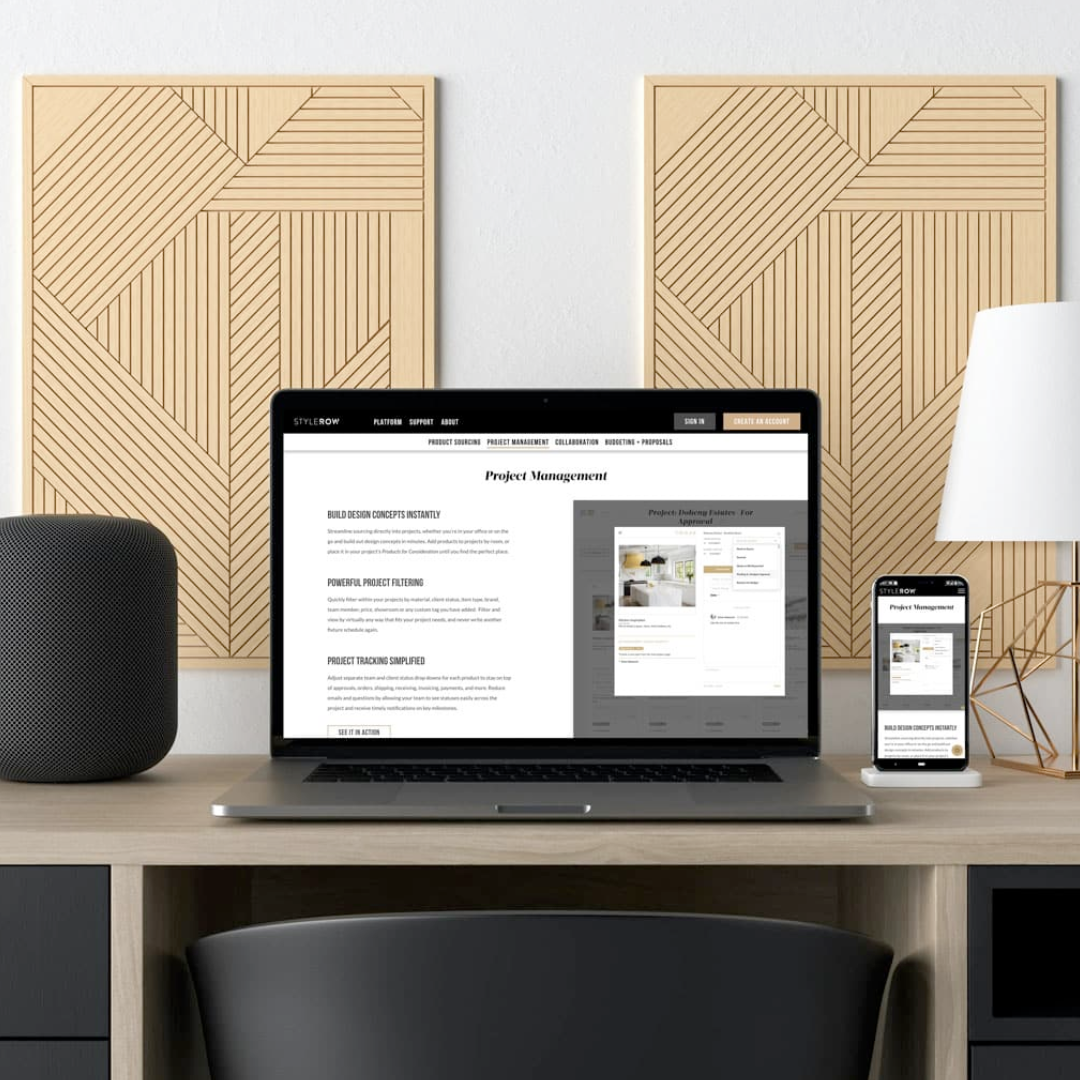
I never miss a chance to discover emerging technologies and innovative software solutions for interior designers, that’s why I recently attended a demo for StyleRow. This platform caters to interior designers, home stagers, developers, and real estate investors, promising an integrated approach to project management that could solve common pain points and redefine your design process. I’m excited to share what I learned and let you see for yourself whether you think StyleRow could be the answer you’ve been looking for.

Connecting Teams, Clients, and Vendors

Communication is the cornerstone of design success, and StyleRow addresses this by providing distinct views for teams, clients, and vendors. This way, you can seamlessly manage task lists and maintain streamlined communication across multiple layers all within the platform.

Streamlined Team Workflow

StyleRow shines particularly brightly in team-based environments. Imagine a scenario where the lead designer compiles a list of required items, which then allows the design assistant to source each of these items seamlessly. This systematic process is meticulously tracked from inception to completion, with the platform sending timely notifications for any updates or revisions.

Centralized Product Information and Progress Tracking

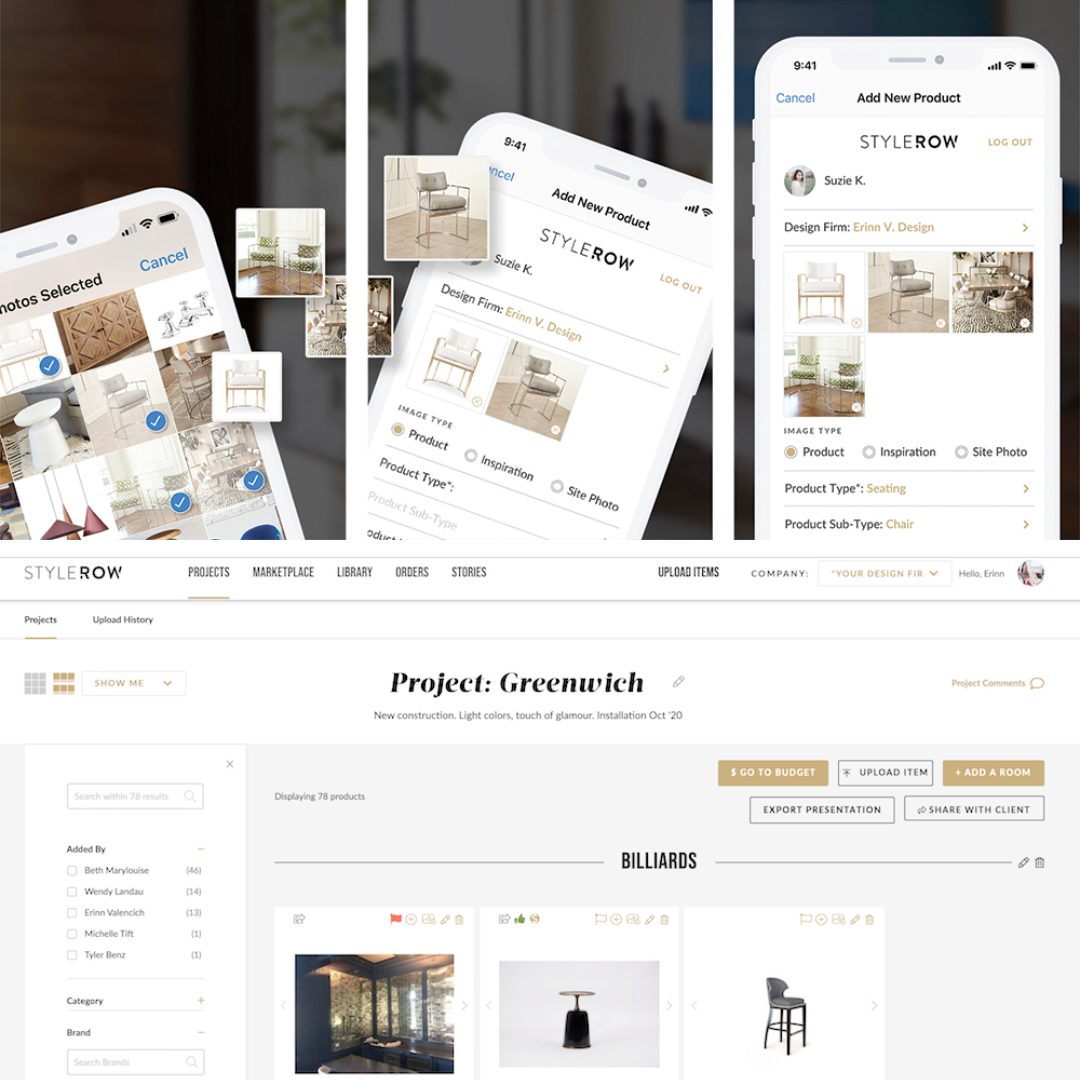
Input all of the essential product information, from pricing to lead times, and keep track of its status with an easy drop-down menu instead of typing out notes each time. Additionally, the Team Messaging tool facilitates real-time progress updates among team members, fostering an environment of collaboration.

Mastering Organization

Simultaneously manage unlimited projects on StyleRow. Inside each project, categorized folders meticulously document every facet, ranging from initial inspiration photos and floorplans to sourcing endeavors. The platform even includes a clipping tool to save products from various vendor and retail sites, all of which can be stored in a master product library. Manage your time with its optional built-in time tracker.

Comprehensive Tools

You can forget about formatting and filling out spreadsheets and doing double work. This is a toolkit for managing every aspect of your projects, from crafting master shipment tracking lists and finish schedules to material schedules and even adding services such as painting.

Empowering Financial Management

StyleRow makes exporting data to Excel or presentation formats a breeze, while the platform's QuickBooks integration facilitates seamless creation of purchase orders and invoices. Moreover, StyleRow provides an embedded budgeting tool to conveniently track client budgets.

Client Dashboard for Enhanced Interaction

StyleRow enhances the client-designer relationship by providing an interactive client dashboard. This dashboard allows clients to view your proposals and sign off on budgets, orders, and more, all through a shared link. As a designer, you retain total control over the information presented, offering a tailored experience for your clients.

Visual and Functional Harmony

Last but not least, the platform is designed in an intuitive and aesthetically pleasing way, which is something that you, as an interior designer, will surely appreciate!

Affordable Pricing

With its wealth of tools and capabilities, StyleRow offers competitive pricing, catering to teams of up to 5 members at $49.99/month and individuals at $29/month or $299/annually.

If you’re curious to see more, check out their introductory video below, book a demo, or take advantage of their 14-day free trial!

xx, Danae


How Virtual Reality Can Help Interior Designers

Interior designers are used to showing their proposals in 2D and 3D images. So, the logical next step is an even more immersive way to help clients better understand your vision and get a better sense of what the space will feel like. This is where Virtual Reality (VR) comes in. Users wear a headset to interact with realistic digital environments, taking design from theoretical and hypothetical to experiential.

Although polished and approachable programs for VR in interior design have not yet reached mainstream markets, a glance at technology news indicates that the industry is rapidly moving in that direction. If you need a sign of the times, Metaverse celebrated the first edition of the Metaverse Architecture and Design Awards (MAD).

So, let’s muse about the potential benefits that VR could offer you as an interior designer, proving that it’s worth staying tuned to its new advancements. By utilizing VR programs, both designers and clients can immerse themselves in 360-degree designed spaces, offering a heightened level of realism and perspective. This opens up possibilities such as:

Unleashing Creative Boundaries:

With VR, designers can explore daring and innovative design directions without the concern of significant time investments, fostering creativity and pushing design boundaries to new heights.

Enhanced Client Engagement:

VR enhances client meetings by providing an immersive experience that brings the space to life. Clients can visualize and feel the design firsthand, leading to better feedback, improved satisfaction, and stronger collaborative decision-making.

Streamlined Material Selection:

VR enables designers to virtually explore a wide range of finishes, textures, and materials. By visualizing these options in VR, designers can save valuable time and money on ordering physical samples, making informed decisions upfront, and reducing the need for costly returns.

Error Prevention and Design Accuracy:

Through immersive VR experiences, designers can identify and address potential design flaws or mistakes. By exploring the space from an immersed perspective, designers understand how different elements come together, minimizing the chances of overlooked details.

Gaining Competitive Edge:

As VR becomes increasingly sought-after by clients, embracing this technology positions interior designers ahead of the competition. Offering immersive experiences sets designers apart and meets the growing demand for cutting-edge design services.

So, are there any downsides to using VR as part of your interior design process? More than drawbacks, you’ll likely face some initial hurdles such as the investment and learning curve. While VR provides immersive visual experiences, it currently falls short in replicating other sensory aspects crucial to interior design, such as touch, smell, and realistic sound propagation.

All in all, VR presents a multitude of exciting advantages and possibilities for the field of interior design. As technology continues to advance, we can look forward to leveraging its capabilities to enhance the design process, create immersive experiences, and push the boundaries of what is possible in designing and visualizing interior spaces.

xx, Danae


DIGITAL TEMPLATES?

We love helping busy interior designers like you! So, in an effort to provide the best resources possible, WE WANT TO HEAR FROM YOU about what templates you’d like to see from us. Browse our current collection of templates here for any you might need or want, and email us at danae@elitedesignassistants.com to let us know what other templates you’d like us to make and have available for instant download! 

Mindset Matters: Affirmations to Help You Thrive as an Interior Designer

As interior designers, our mindset plays a vital role in our daily work and overall success. The way we think and talk to ourselves can significantly impact our mood, creativity, and ability to handle challenges. It's easy to cringe or feel a bit ridiculous when imagining muttering feel-good mantras to ourselves, but let's not forget the harsh put-downs we give ourselves all too easily when we make a mistake or feel inadequate. Amid demanding deadlines, client revisions, and creative blocks, it's easy to get overwhelmed and lose sight of our own worth and capabilities. That's where the power of affirmations comes in. Even if only to counterbalance that negative self-talk, why not give affirmations a try?

Affirmations are positive statements that we repeat to ourselves to cultivate a mindset of confidence, resilience, and success. By incorporating affirmations into our daily routine or using them whenever the need arises, we can shift our self-talk and improve our overall well-being as interior designers. Here are seven examples of powerful affirmations to help you thrive in your professional journey:

"I am a talented and skilled interior designer."

Remind yourself daily that you possess the talent and creativity necessary to excel in your profession. Especially on days when you’re doubting yourself.

“Every setback is an opportunity for growth and learning; I am resilient and adaptable.”

Interior design is a field that constantly presents new challenges. Adopting a growth mindset will enable you to approach these obstacles as learning experiences rather than defeat.

"I am confident in presenting and defending my design ideas."

Confidence is key when it comes to presenting and defending your design choices. Remind yourself that you have the expertise and knowledge to articulate your vision with conviction.

"I am resourceful and find creative solutions to design challenges."

Resourcefulness is a valuable trait for any interior designer. Affirm that you possess the ability to find innovative solutions to design challenges, leveraging your creativity and problem-solving skills.

“I am deserving of success and abundance in my career as an interior designer.”

Believing in your worthiness of success and abundance sets the stage for attracting opportunities and achieving your goals.

"I am grateful for every opportunity to create beautiful spaces."

Gratitude is a powerful mindset tool. Express gratitude for every project and every opportunity to create beautiful spaces. By cultivating a sense of gratitude, you will approach your work with enthusiasm and appreciation, ultimately enhancing the quality of your designs.

"I take care of myself to maintain a healthy work-life balance."

As interior designers, it's crucial to prioritize self-care and maintain a healthy work-life balance. Remind yourself that taking care of your well-being is essential for your creativity and overall success.

There are no hard and fast rules when it comes to affirmations. Feel free to modify the suggestions above or create your own entirely. There are also many different kinds of affirmation audios available on popular platforms like Spotify. The essential aspect is to crystallize the affirming idea you need most and pronounce it (even if it's silently in your thoughts). By adopting these affirmations, you can cultivate a mindset of confidence, resilience, and creativity that will propel you forward in your career. So, next time you’re feeling distraught at your desk, take a deep breath and try an affirmation!

xx, Danae

How to Get the Most Out of Your Interior Photoshoot - 9 Keys

It's not uncommon to develop an emotional attachment to certain projects, homes that you would love to keep as your own. However, all we can keep are the cherished memories and, of course, the photos. And these photos are arguably your most important marketing tool. In this guide, we will explore practical tips and considerations to help you maximize the potential of your interior photoshoots. From preparing clients and hiring a professional photographer to styling techniques and utilizing natural light, we will cover everything you need to know to create captivating images.

1. Set expectations from the start.

Before starting a project, communicate with your clients about the importance of photography and its impact on your portfolio. Ensure their cooperation and discuss any privacy concerns for high-profile clients. Setting expectations early on will help you secure the necessary access and cooperation for a successful photoshoot.

2. Arrange for an empty space.

Whenever possible, schedule the photoshoot when the owners can temporarily vacate the space. This allows you to work without distractions and gives you the freedom to rearrange personal belongings that may not align with the desired aesthetic. Before moving anything, take reference photos of the space as it is, so you can easily restore it to its original state afterward.

3. Hire a professional interior photographer.

While you may have an eye for design, entrusting the photography to a professional specialized in interior photography is highly recommended. They possess the technical expertise, equipment, and knowledge of angles, lighting, and composition that can truly elevate your images. Their experience can help you achieve magazine-worthy shots that increase your chances of publication.

4. Enlist an assistant.

Having an extra set of hands during the photoshoot can be immensely beneficial. An assistant can help with styling, swapping props, and setting up different options quickly, saving you time and ensuring smooth transitions between shots.

5. Come prepared with styling props.

To achieve a polished and inviting look, bring a variety of props that add texture and interest to your photographs. Consider items such as baskets, pillows, throws, freshly cut flowers or branches, vases, coffee table books, and even framed artwork. These props will allow you to create layers and a lightly lived-in feel that resonates with viewers.

6. Share the project's story.

Collaborate with your photographer by sharing the backstory and inspiration behind the design. Understanding the narrative will enable them to capture images that reflect and enhance the project's essence. By creating small vignettes that showcase everyday moments–think a sliced lemon next to a pitcher of lemonade on the kitchen counter–you can infuse the photos with a sense of intimacy and authenticity.

7. Discuss shot variety and formats.

Engage in a conversation with your photographer about the desired shot selection and formats. Discuss the importance of both overview shots to showcase the entire room and close-up shots that capture intricate details. You’ll want options in different formats that serve varying purposes and platforms. Ask for mostly vertical shots (best for magazines and social media) and some horizontal shots for your website.

8. Utilize natural light.

Communicate the orientation of the space and the best time of day for natural light to your photographer. Shoot during the hours when indirect natural light bathes the room, creating a warm glow. Avoid direct sunlight, as it can cause harsh shadows and highlights. Turn off artificial lights to maintain a consistent and natural ambiance. And don’t forget to hide the cords. 

9. Prepare yourself for the long haul.

Photoshoots can be time-consuming, often lasting an entire day or even multiple days for larger projects. Prioritize your comfort by wearing suitable clothing, staying hydrated, and getting ample rest. Fully immerse yourself in the opportunity to capture every aspect of your meticulously designed space.

By following these tips and preparing for the photoshoot well ahead of time, you can ensure that the best of your project is brought out to make a great impression on potential clients and the industry as a whole. So enjoy it!

xx, Danae


DIGITAL TEMPLATES?

We love helping busy interior designers like you! So, in an effort to provide the best resources possible, WE WANT TO HEAR FROM YOU about what templates you’d like to see from us. Browse our current collection of templates here for any you might need or want, and email us at danae@elitedesignassistants.com to let us know what other templates you’d like us to make and have available for instant download! 

Planning Like a Pro: 6 Effective Tips for Organizing Your Editorial Calendar

If you're reading this, chances are you can understand the struggle all too well. It's the middle of the week, and you haven't managed to share anything on Instagram yet. On top of that, you have a backlog of content from site visits that you haven't had the chance to sift through. As an interior designer, “social media manager” can feel like yet another hat you have to wear... but fear not! By implementing a well-designed editorial calendar, you can bring order to the chaos and find your rhythm in no time. Let’s dive in.

An editorial calendar can be described as a comprehensive plan outlining specific themes, determining the content you'll post on designated days, and scheduling it well in advance, often spanning weeks or even months. This includes photos and videos for social media, newsletters, blog content, and anything else you share online. So, how can you make the most of it?

1. Use an Effective Platform

You may already be using project management software or programs that you could also use for creating your editorial calendar. Incorporate your content into your workspace scope. Asana, Trello, and Monday.com are just a few popular options.

2. Keep Your Files Together

Even if you don’t have time to sort through all your photos and videos the same day, take 3 minutes to do a content dump to a sub-folder, within your master content folder. Name it in a way that allows you to find it easily in the future (e.g. Paint Sample Site Visit).

3. Block Out Your Planning Time

Instead of scrambling to create content in short, stressful bursts, schedule regular time, such as once every two weeks, to sit down and consider your current marketing strategy along with your firm's latest highlights. Map out a plan for the next month and generate ideas for the following months.

4. Set Notifications and Reminders

Having a plan is great, but it can easily slip your mind. Set scheduled reminders to post your content. Some project management platforms integrate with social media management tools, enabling you to schedule and publish posts directly from the platform. Aim to post during high-traffic hours, and keep an eye on the times that tend to be most successful for you.

5. Alternate Types of Content

To keep things fresh and interesting, alternate between different types of content. Include behind-the-scenes progress photos, day-in-the-life reels, images related to your blog posts, seasonal posts, and high-quality portfolio shots. Ensure that everything aligns with your brand identity and aesthetic. Maintain a master timeline of content topics to have a quick overview of your posting history.

6. Outsource

You actually don’t have to do all of this on your own. Conceiving all the ideas behind your content can be time-consuming, yet maintaining an online presence is crucial. Consider meeting with a Virtual Design Assistant to brief them on your brand identity and voice. They can take a lot of the work off your plate, so you can spend more time actually designing!

By calmly curating your content themes and setting a realistic posting frequency, you can ensure a steady flow of captivating posts that resonate with your target audience. Don't be afraid to collaborate with guest contributors and align your content with key events to further enhance your online presence. And remember, a content bank is your best friend for storing and organizing ideas. So, get planning and watch your interior design brand flourish in the online realm!

xx, Danae


DIGITAL TEMPLATES?

We love helping busy interior designers like you! So, in an effort to provide the best resources possible, WE WANT TO HEAR FROM YOU about what templates you’d like to see from us. Browse our current collection of templates here for any you might need or want, and email us at danae@elitedesignassistants.com to let us know what other templates you’d like us to make and have available for instant download! 

Six Simple Ways to Add Self-Care into Your Workday

On some work days, you may find you just don’t have any time left for yourself. You had wanted to prepare a wholesome meal or hit the gym, but they got pushed to the back burner. And at the end of the day, you’re feeling neglected…by yourself. Sound familiar?

I propose a different approach. Why not focus on implementing small-scale actions that can seamlessly integrate into your day, rather than viewing self-care as a separate task that can be postponed or shuffled aside? By incorporating even a single intentional act of self-care into your daily routine, you can steer yourself toward a greater sense of well-being. Besides, if you’re feeling better, your business will be in better hands.

In that spirit, here are 6 examples of little ways you can add some self-care into your work day, starting today.

Take Real Breaks

Instead of mindlessly getting caught up in phone scrolling as a means of escaping stress throughout the day, grant yourself the gift of a genuine break. Set a time limit, allowing yourself to fully detach from work without any guilt. Use this time for activities that replenish your energy and promote well-being, such as taking a brisk walk, indulging in stretching exercises, reflecting through journaling, repeating affirmations, or simply savoring a refreshing glass of water while consciously relaxing your breath. These micro-breaks can boost your energy levels, improve focus, and reduce mental fatigue.

Set the Mood

As interior designers, you’re a pro at making other people’s spaces beautiful, but in all the chaos, your own workspace might be missing out on that TLC. Bring one or two small details that bring you joy into your workspace, like a scented candle or plant. Evaluate whether your setup is ergonomic and comfortable for you. Buy that cute stone mug that you’ll be reaching for throughout the day. Your workspace should reflect your personal style and be a source of inspiration and tranquility as you work your magic.

Engage in Mindful Eating

It's common for professionals to eat lunch at their desks while multitasking. However, practicing mindful eating can bring a sense of calm and enjoyment to your workday. Take the time to savor your meals, focusing on the flavors, textures, and aromas. Eating mindfully not only promotes better digestion but by paying attention to your body's needs and nourishing yourself with nutritious meals, you'll feel more energized and ready to tackle your design projects. 

Establish Necessary Boundaries

Getting into the habit of setting healthy boundaries with clients and colleagues is a transformative practice that can shield you from unnecessary stress and conserve your valuable time and energy. By recognizing and asserting your boundaries, you regain control over how your projects unfold, striking a balance between taking charge and accepting the elements beyond your control. This shift in mindset enables you to operate from a place of peace and empowerment.

Express Appreciation

In the whirlwind of the workday, it's easy to get caught up in the relentless cycle of tasks and responsibilities. But it’s so worth it to pause and acknowledge both your personal accomplishments and those of your team. Let yourself bask in the satisfaction and say, "Yes! I nailed it!" Go out of your way to recognize and appreciate the outstanding work of your team members. By cultivating this positive atmosphere, you're nurturing yourself and those around you, fostering a space where you can thrive.

Follow an EOD Routine

Allocate the final 10 minutes of your workday to check off tasks and review your agenda for the following day. By following this ritual, you can ensure that everything is in order and gain a sense of accomplishment. Being clear on what awaits you the next day provides peace of mind and allows for a genuine disconnection from work. Rather than constantly wondering if you overlooked something important, you can truly relax and enjoy your time away from the office.

Remember, self-care is not a luxury; it's a vital ingredient for your overall well-being and success. By incorporating these small acts of self-care into your workday, you are taking proactive steps to prioritize your needs and nurture yourself. So, starting today, make a commitment to infuse your day with moments of self-care. You deserve it, and your professional journey will thrive as a result.

 xx, Danae


DIGITAL TEMPLATES?

We love helping busy interior designers like you! So, in an effort to provide the best resources possible, WE WANT TO HEAR FROM YOU about what templates you’d like to see from us. Browse our current collection of templates here for any you might need or want, and email us at danae@elitedesignassistants.com to let us know what other templates you’d like us to make and have available for instant download! 

Earn More by Working Less with Passive Investing in Private Lending


It’s time to start converting your income to PASSIVE INCOME with Double-Digit Returns!

In a world where time is the most valuable asset I think it’s time we start taking some of that time back! Those of us that have been very fortunate to be successful in our businesses know that it typically comes with a price and that price is time. In our current climate, we’ve found ourselves busier than ever and often wonder how much longer we can continue at this pace. I’ve spent the last several years listening to my clients and listening to myself and so NOW I am starting an initiative to educate women on how we can start taking back some of our time.

With my background in real estate, the financial industry, and interior design it made complete sense to me that passively investing in real estate would be something that I could educate others on. After a few years of research and constantly finding real estate gurus talking about creating passive income by purchasing short-term rentals and other real estate I realized I did not want to become a landlord. I wanted to find a way where my money could work hard for me, where I didn’t have to do any of the work. That is where I discovered private lending in real estate.

Private lending is where you lend funds to another real estate investor who is purchasing deals for fix and flips, multi-family, buy and holds, short-term rentals, etc. You provide the capital, and they do all the work. We focus on shorter-term deals around 6 to 12-month deals with double-digit returns, but we do get larger-scale deals that are just too good to pass up as well. Our clients get to sit back, relax and invest in real estate that is protected, insured, and secured.

My mission is to help people take control of their finances and their lives. You’ve worked hard, you deserve to be able to find a way to make your money work hard for you and I’ve got the tools to help you!

Not only am I educating people on private money lending, we now have investment opportunities and I have access to a lot of opportunities based on your goals.

If you want to learn more about our opportunities, please sign up for our newsletter at  Passive Investing — Elite Design Assistants. Also, please feel free to reply to this email with any questions.

Let’s make more money by working less! Are you in?

xx, Danae


DIGITAL TEMPLATES?

We love helping busy interior designers like you! So, in an effort to provide the best resources possible, WE WANT TO HEAR FROM YOU about what templates you’d like to see from us. Browse our current collection of templates here for any you might need or want, and email us at danae@elitedesignassistants.com to let us know what other templates you’d like us to make and have available for instant download!