Services you can start offering in your interior design business in 2021

It's always wise to offer multiple ways that your clients can work with you. The best way to do this is to create a value ladder, with services in all different price points. I suggest choosing at least one service in each price point, low, mid, and high. 

Not only does this widen your reach on who you can work with but when someone buys a lower ticket offer, they are then more likely to purchase a higher-ticket offer from you when the time comes. They'll know, like, and trust you after their first buy and they will have no hesitation about moving forward with more work with you.

Here are a few ideas for low, mid, and high ticket offers that you can create now and start selling in 2021!

Paint Color Palette (low): This is a popular one! You can do pre-made palettes that your clients can purchase or you can offer color consultations that are priced a little higher and are customized for their particular space. Either way, this is a great first offer that shows your client that you are the interior design expert that they need in their lives.

Ask a designer (mid) : Another popular term for this is "designer on call". This term means that the client is taking more of a DIY approach but you will be guiding them along the way. This typically does not include deliverables of any kind beyond design advice and/or confirming that the client is on the right path.  This can work a couple different ways. Some designers choose to let clients buy a set # of hours for a specific price that they can use over a period of time and some designers require their clients to purchase weekly or monthly packages.

Turn-key and/or custom curation (high): This is a service that the majority of interior designers offer in their business and is usually placed at the top of the value ladder. This would involve working on an entire room or home, product curation/design and project management. This is a great way to make a profit on custom designer items and bring more money into your design business. 

Whatever services you decide to offer, make sure that they are aligned with what your ideal client is looking for and market it in places where they are hanging out online!

Need help to create a value-ladder for your business? We can help. Contact us today to get paired with the perfect elite design assistant for your needs. 


Virtual Render Tours

virtual house.JPG

Hand rendering is one of the most amazing skills in the interior design industry. Since I can’t draw, I’m super envious of those who can. A beautifully framed hand render can make a great client gift after the end of a project but for the time it takes someone to hand render … it’s become a lost art.

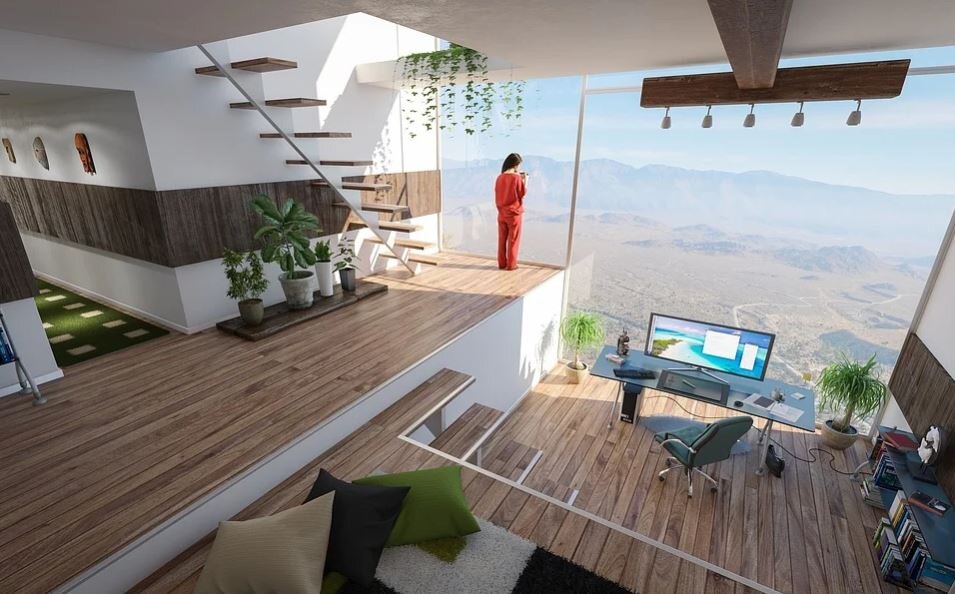
Technology has offered a much more efficient and cost effective way for interior designers to share their vision of a space with their clients. Remember when 2d renders became a big deal and then 3d? Now we’re on to photorealistic renders that often make it difficult to tell if a space is an actual photograph or or a render. As technology continues to improve so does the way in which interior designers deliver their vision to their clients.

Today, more interior designers are doing virtual render tours where their clients can take a virtual tour through a rendered space. I starting writing this article last week as I meant to send it last Wednesday, since I procrastinated Forbes has since come out with an article about virtual only showcase homes. You can read that article here .

Mentioned in the article is the Seasonal Living Interactive Luxury Designer Showcase that is making it’s debut online December 3, 2020. There are no fees to tour the virtual house and you may recognize many of the 11 designers and 15 corporate sponsors supporting the idea of an online-only event. To learn more about this event click here.

To register for the Seasonal Living Interactive Luxury Designer Showcase click here.

COVID has made touring spaces a bit more difficult and so the interior design industry has had to pivot, pivot, pivot! Designers and vendors are now creating virtual rooms where clients can not only tour a space but they can also click on objects for purchase. There are even virtual tours of buildings and spaces that don’t even exist in reality.

Render artists have become so advanced that they are creating entire virtual cities and towns.

If you are interested in learning more about creating virtual render tours for your business, I’ve come across the 3D viewer app by Chief Architect that seems to be the most popular among designers creating virtual tours at this time.

As always, please feel free to let me know if you need anything!

Have a great rest of your week,

Danae

Take Your Design Business to the Next Level

As you know, I’m here to share with you the helpful tips, tricks and information I learn in the interior design industry that will help you succeed in running the most fulfilling and profitable business possible. Today, I want to share with you a business I came across that’s goal is to improve the interior design industry one design firm at a time.

The Interior Design Standard, created by East Coast interior designer Sandra Funk (House of Funk), is making a huge impact on a number of interior designer’s businesses across the country.

Why is this program making such an impact? Because the Interior Design Standard is House of Funk’s business structure. That’s right! The program includes a variety of modules with templates, processes, tools and tech for designers to implement the structure into their own businesses. Within each module are videos explaining the ‘why’ behind Funk’s processes, with her personal experiences and lessons learned weaved in.  

The program is delivered in a friendly digital format. Designers receive lifetime access, live virtual community events and access to the ultimate design community: the Standard Inner Circle. “Our mantra is ‘Rise, Designers, Rise’. By helping one designer at a time, we hope to see the entire design industry improve,” says Funk.

The Standard inner circle members average 11 years in business. "It's incredible to watch this group of entrepreneurs, ranging from brand new to the industry to 40-year veterans, making the choice to intentionally improve their businesses. It is an honor to know each and every one of them," says Funk.

This program is perfect for any designer who needs organized processes, wants to learn more about how a thriving and successful design practice does it and wants to bring the joy and passion back into their business.

Highlights of the Standard include:

-          The design fee calculator - finally a formula that removes the fear of flat fees

-          The design agreement that both clients and designers love

-          The exact process that each interior design project follows, from the first potential client contact to completing photo worthy projects

-          Access to the Standard Inner Circle, a community of designers improving their businesses together via a private Facebook group and community Zoom calls facilitated by Sandra

Enrollment only happens twice per year and the next enrollment period is in May 2021. If you are interested you can sign up for updates at https://houseoffunk.com/trade. I will also send another email about the Standard in May as a reminder in case you are interested in the program.

As always, please feel free to reach out if you have questions!

I hope you have a wonderful day! Danae

Unique Design Niches

yacht.jpg

Interior designers come in all shapes and sizes and I’m sure many you know, like yourself, may specialize in kitchen and bath or whole home. But what other niches are out there? The most recent niche to emerge is what I call the quarantine niche. Designers are designing homes with more recreational and entertaining space, more separation and sanitation and more comfort for those quarantined at home either alone or with other family members.

I thought it would be fun just to research other design niches that we often don’t think about on a day-to-day basis and this is what I found.

Aviation design – There are interior designers who specialize in private jet design. This type of design is very challenging and extreme as you must be great with working with small spaces and working with all the codes that aircraft interior design entails.

Yacht design – Although you could be working with more space than a private jet, this type of design is still challenging and requires knowledge of naval architecture and marine engineering.

Airstream design – The other day I came across an interior designer on Instagram who specialized in Airstream interior design. Again, another change in our economy was the number of people who purchased RVs this spring and summer. Some of them have great bones but need an interior designer to create the luxurious and comfortable environment the owner wants.

She Shed design – There are people who specialize in She Sheds, Man Caves, Playhouses and all sorts of rooms away from the home type structures. There are so many interesting options when it comes to this type of design.

Limo design – Yes, there are people who design the interiors of limousines! I didn’t realize it until I did the research how crazy and luxurious limos can get. There are some that have narrow pools in them.

What other fun design niches can you come up with?


New Sourcing Tool Makes Life Easier

sourcing tool.jpg

Monetizing an interior design business with products is a conversation that is ever evolving in the design industry. Between vendor accounts, affiliate links, buyer clubs and sales tools, at times it can be hard to decide what’s best for you and your business. Using a variety of these options can be very beneficial to your business and today, I’m going to share more information about one sales tool I came across that has become a real game-changer for many independent interior designers.

SideDoor is a sales tool and platform where interior designers can curate shoppable collections of products from their favorite vendors to share with their clients and/or social media followers. This tool gives you the option to create collections and invoices specifically for your clients AND it allows you to create collections in your style and brand to share on your website and social media platforms.

With over 80 popular vendors and average commissions of 33% this sales tool allows you to monetize your business in a much simpler way. So how does this work? Follow the steps below.

1.       Request Access – you can go to www.onsidedoor.com and request to be a part of the program. SideDoor will review your request to see if you’ll be a good fit. Once you are accepted, you will get in on the early access program, which is currently FREE. (Date of this post is 10/20/20)

2.       Curate Collections – After you are accepted, you can start creating collections using products from a vast array of vendors at vendor direct designer net pricing. You can share these collections in client proposals or directly online with your followers.

3.       Share – Once your collections are curated you’ll be able to embed shoppable links on your website, blog and other social media platforms.

4.       Earn Commission – When your clients or followers purchase products from you, you earn the spread between designer net and retail. SideDoor takes care of the rest.

5.       Sit Back – Once your client makes a purchase, SideDoor will fulfill the order, get it to your client and deposit your earned commission.

If you are interested in learning more, you can visit the SideDoor website at www.onsidedoor.com to check out their current vendors, frequently asked questions and apply for access.

For more information on exactly how the sales tool works, you can also sign up for a webinar using the link below. The webinar is Wednesday at 1:00 p.m. EST.

 https://zoom.us/webinar/register/WN_lOMV7remSQ6Yoc3ctkVEKQ

These webinars are available every Wednesday so you could sign up for another time if this Wednesday is not convenient for you.

SideDoor is a simple and easy to use tool but we know you are busy and actively growing your business. Whether you are currently using SideDoor or you decide to sign up now, we are here to help. There are several VDAs on my team who are able to help you manage your SideDoor account to make sure you are using the tool to its full potential.

Have a wonderful day!

XX, Danae


Self-Hosted Project Management

office.JPG

Many interior designers use project management software such as Ivy, Studio Designer, Mydoma, Design Manager or another software. Last week’s blog post focused on the features of these project management systems.

What happens when you don’t find the right fit, or decide to do it yourself either with free programs or programs you already have? There is a group of interior designers that are doing this and are considered self-hosted. They don’t use any of the software options above to stay organized. So how do they do it?

MICROSOFT EXCEL

Most people already have Microsoft Excel and if you are good at it, it can be used to organize projects, orders, expenses, bookkeeping and a variety of other things in your business.

PINTEREST

You can create private boards to share with your client to house your design ideas and product choices for their design. You can also create a private board to create a library of your favorite and popular products and sources.

GOOGLE DRIVE

You can keep photos, stories, designs, drawings, recording, videos and more in your google drive. Your first 15 GB is free with a google account. This is also great for storing notes, spreadsheets, invoices, documents and correspondence with clients.

TRELLO

This free cloud-based platform is great for working with your clients to collaborate on projects. You can create boards, lists and cards to help you stay organized. Many of my virtual design assistants use Trello when collaborating with designers as well.

PAYPAL, VENOMO, WAVE

Create invoices and collect payments. These are free to use but some fees may apply for processing payments.

HELLO SIGN

Use this free service to collect digital signatures for your client contracts. Collecting signatures with this platform just became a lot easier.

MAILCHIMP

Free for up to a certain number of subscribers this service is a great way to get started with your email subscriber list. As you grow you may want to consider using a paid service for your email campaigns. Next week’s post will be on the best options for your email subscriber list and emails.

WEBSITE

Some designers even use private pages on their website to communicate with their clients regarding renders, concept boards, selections, etc.

Self-hosted may take a bit more organization but some people are more comfortable using systems they are already familiar with. There are a variety of ways to be successful in this business. It just depends on what works best for you!


Best Project Software for Interior Designers

computer.JPG

I work with a lot of interior designers and they use a variety of project management software including Ivy, Mydoma, Studio Designer, Design Manager and self-hosted.

Which one is best for you? Hopefully the information below will help. Mydoma was the only one I was able to locate new updates for 2020.

Ivy
Ivy’s website states - Our platform is designed to take the pain out of administrative tasks and allow designers to focus on the work they love. You don’t just get access to the Ivy platform, but also to our incredible industry resources, and the most powerful and supportive design community.

I’ve been told that Ivy has a low learning curve and is the user-friendlier version of Studio Designer. Ivy works well with direct integration with QuickBooks online including easily accepting credit cards. Ivy allows you to view project timelines without added data entry because estimated ship dates automatically go on the Project Calendar. Ivy will continue to add functionality to make it a strong candidate for the interior designer’s use.

Although it may be user friendly, it does take two programs to do what Studio Designer can do in one. Studio Designer is more customizable; however, Ivy is still very popular among interior designers.  

Key features:

Product Sourcing

Proposals & Invoicing

Room Boards

Project Tracker

Time & Expense Tracker

Online Payments

Reports

Mobile App

QuickBooks Online Sync

Pricing: Free $0/month

Starter $59/month

Essential $49/month when billed annually – Current Special Offer

Ultimate $199/month when billed annually

Try it: They offer a free demo at www.ivy.co. Ivy is owned by Houzz.  

Design Manager

Design Manager is an all in one software for project management, purchase order tracking, accounting, reports, inventory. Since Design Manager isn’t super user friendly it is often used by established design firms. Their website claims 70% of interior designers prefer Design Manager over QuickBooks.

Design Manager is the leading project management and accounting software for interior designers. Created in 1984 to respond to the requests of local interior design firms, it expanded into a nationwide software company and became one of the first providers of cloud-based design software. Because design firms have specific needs that cannot be answered by conventional software, it is our mission to provide a product that is dedicated to serving the design community. We deliver software that saves time, money, and frustration, while eliminating countless hours of paperwork.

Key Features:

Project management

Time billing

Enter spec info fees, markups and discounts

Client documents with payment links

Purchase orders

Order tracking

Receipts

Accounting

Reports

Inventory

Pricing:

DM Cloud $39.99/month

Pro Cloud $54.99/month

Save 10% by paying annually

Current offer: Save 50% off first 3 months.

Try it: They offer a free trial at https://designmanager.com/

Mydoma

Mydoma is great organizational tool for your interior design projects.  Many designers love the systems and process and creating automations so that your business runs easier and Mydoma helps with this.  The Mydoma platform helps with the onboarding process, a place to keep project info (ex: space info, before images, measurements, inspiration images), and a place to collaborate with your clients.  Using Mydoma you are creating an online design studio/project binder to collaborate with your clients.  You can have new clients sign contract, fill out onboarding questionnaire, and send initial payment all within the program.  Great if you do e-design or smaller design packages.

This software is limited if you run a full-service interior design firm.  And the accounting is in QuickBooks, so it requires double entry for products.  

Key features:

Orders, invoices & online payments

Design packages

Product sourcing

Time tracking

Client portal

Designers Toolkit

Pricing: $59 per month for Solo

$79 per month for Team (8 users)

$12 per month for Agency

Try it: Free 30-day trial. www.mydomastudio.com

Brand New Features 2020

  • Ability to set categories to vendors - Suppliers or Service Provider

  • Better organization & management of services

  • Comprehensive proposals redesign

  • The addition of “Grouped” products

  • Ability to create purchase orders & work orders on the same window

  • Creation of invoices on a proposal level

  • Comprehensive reporting

For more information on Mydoma Studio 3.0 - Tulip

Studio Designer

Studio Designer claims to be the leading application for interior design professionals. It provides project management and accounting systems for its users. In 2016, it created a Vendor Portal and Client Portal. In 2019, version 2.0 is a new streamline look and efficiencies.

It is a very robust and extensive program for every operation a design firm could face.  This is a one-stop-shop for all your interior designer application needs.  Because of this Studio Designer can feel overwhelming for a novice designer.  It is an accounting program and project management program wrapped up in one.  You can manage your entire business from this program.  Accounting, Expediting, Ordering, Timelines, Reminders, Logistics, Inventory and so much more. 

This program is very technical, and you may need an accountant that specializes in the program.

Key features:

Project management

Studio capture

Time billing

Client portal

Integrated accounting

Reporting

Pricing: Basic - $35/month

Professional - $45/month

Try it: Studio Designer does not offer a free trial, but they do offer pro-rated refunds, if you wanted to try it for a few days for a few bucks.  www.studiodesigner.com/

Self-hosted

I know more and more interior designers that are going to a self-hosted type of program. They use landing pages on their websites to organize and communicate with clients, Pinterest boards for sourcing and communicating with clients, spreadsheets for orders, order tracking, expenses, budgets and processes to stay organized and on top of their businesses. This isn’t for everyone but if you are looking for a cost-effective way you may be interested in checking out a self-hosted system. Next week, I’ll be writing about how the self-hosted system works and why it might be beneficial to you!

Sourcing Tips & Tricks

DA grey.jpg

As you are aware, being an Interior Designer means juggling a multitude of things from client meetings, to sourcing, invoicing, proposals, dealing with contractors and the list goes on and on. Streamlining processes are crucial to building and maintaining a successful interior design business and so today I’m going to write about sourcing.

Sourcing can be as simple or as complicated as you like, but to simplify things I’ve got a few great tips and tricks for you below.

1.       Narrow down a list of key vendors. I know many interior designers that only work with their favorite vendors … you know the ones. They are easy to work with, offer great commissions and their shipments come on time and intact. Keep this list in your computer or better yet go to each of their websites and save them to your favorites. This way you can have tabs across the top of your website browser that you can get to easily and quickly. If you need help with a list of key vendors … let me know as this could be a blog post entirely on its own.

2.       Keep an ongoing list of your favorite products. I realize you don’t want all your clients’ homes to look the same but there are a handful of items that even the most successful interior designers’ source for multiple clients. For example, I follow a popular interior designer on the east coast who has a very popular blog and from her portfolio I can tell that she loves tulip tables, X benches, anything leopard print, trays and popular design books. She has her go-to sources and can easily source these items.

3.       Organize your favorite products in libraries on Pinterest, Excel or another area of your computer. This way when you have a client looking for a kitchen table you can go to your kitchen table cheat sheet to see if there is a great kitchen table there. I realize these lists will always be changing but it’s a great time saver if you spend a few minutes updating them as needed.

4. Trust your gut and move on! When you create the design for a client you know what you want and what you’re looking for. Choose a few options for each piece and move on. You could spend hours getting lost down the rabbit hole of products available. If you know you spend way too much time sourcing for your clients, decide ideally how much time you should be spending, set a timer and get to it. Again, pick a few great options and move on!

5.       Outsource your sourcing. I realize this is hard for some people but when you find someone great who understands your style and what you are looking for it can be such a huge benefit to your business. Working with a trusted virtual design assistant can be a huge asset to your business.

Hopefully you’ll find these tips helpful in creating a system for sourcing that will save you time and headaches!

Get Clients with Email Marketing!

email list.JPG

Email marketing is where it is at! You can have small list and generate a lot of business from that list. Social media is still great but instead of putting content out there for the whole world to see knowing that fewer and fewer people are seeing it every day, put more effort into the content that your target marketing is seeing.

You may have thousands of followers on Instagram, thousands of likes on Facebook and millions of view on Pinterest but even if you only have a couple hundred on your email list you could be making a lot more money with your email list than all of your other social media combined.

Why are email lists so important? Email lists are comprised of people that want to hear from you. They are interested in what you have to say and are interested in updates having to do with your business. Social media is a very valuable tool but unless you are paying for targeted ads it’s not as specific to your target market as your email list is. The email list provides you with a go-to list of people to contact when you decide to run a special, offer a new service or have great news and updates to share.

Starting an email list is fairly simple for someone who knows what they are doing.  I’ll be honest, my virtual design assistant set mine up for me. The easiest way to start one is to create an opt-in on your website. You can attach this opt-in to all your other social media as well. The opt-in is a pop up that will appear when someone visits your website and it will ask for an email address. A lot of designers offer a freebie in exchange for the email address. You can offer a style quiz or a how-to guide for the most commonly asked questions you receive such as how to hang curtains, how to hang a gallery wall, how to choose the appropriate sized rug, etc.

Once you have your freebie and your opt-in ready you will need to link it to an email capture service like MailChimp, ConvertKit, Constant Contact or SquareSpace. These services allow you to keep an email subscriber list and allow you to set up email campaigns. You can create an automatic email campaign or go in and schedule new ones to go out as needed.

The most common thing I hear from designers is they don’t have time to write the emails. We can help you! We can write them for you or you can purchase them directly from our site at https://www.elitedesignassistants.com/eda-emails-for-purchase.

After searching the internet, I found that email marketing is one of the most cost-effective marketing tools for small businesses. According to the Direct Marketing Association, email marketing on average sees a 4300 percent return on investment (ROI) for businesses in the United States.

This is because email marketing is easy to manage, gives you full control, and allows you to establish a direct contact with your customers.

Now that you are considering doing more email marketing, what marketing services are out there?

I talked to several interior designers and came up with the 4 most popular email marketing services among interior designers. Three of them were listed in an article at wpbeginner.com and one of them is fairly new but it’s becoming a real contender.

CONSTANT CONTACT

Constant Contact is one of the largest and fastest growing email marketing services in the world. It is also the easiest to use and beginner friendly.

You can easily manage your email lists, contacts, email templates, marketing calendar, and more.

Each account gives you access to easy tracking and reporting, built-in social media sharing tools, free image library, list segmentation, Facebook ads integration, and a powerful eCommerce integration for Shopify stores. If you sell product from an online store this could be great.

Their Email Plus accounts also come with powerful features like email automation, surveys & polls, coupons, online donations, and subject line A/B testing which helps you send targeted emails to maximize your open rate.

Constant Contact offers unmatched support with live chat, phone calls, email, community support, and a vast library of helpful resources.

Aside from online training, they also offer in-person live seminars across the United States. This allows small businesses to quickly learn the basics of email marketing and start using it to grow their business like a pro.

For all the reasons above, several sites have rated Constant Contact the best email marketing service for small businesses.

Constant Contact has a 60-day free trial (no credit-card required). After that their pricing starts as low as $20/month.

CONVERTKIT

ConvertKit is a robust email marketing platform for professional bloggers, authors, and marketers. It is extremely easy to use and incredibly powerful.

ConvertKit allows you to easily offer content upgrades and incentives with email signup forms. It also comes with easy to manage auto-responders allowing you to send drip emails.

With ConvertKit, you can easily segment subscribers into those who are interested and those who have already purchased. This helps you increase conversions with automated emails that feel more personal. In marketing terms, this is called targeted email marketing.

ConvertKit offers email-based support and has an extensive knowledge base with great learning material.

ConvertKit offers a 14-day free trial, and their pricing starts from $29/month. They also offer a 30-day refund policy.

MAILCHIMP

Mailchimp is one of the most popular email marketing service providers in the world primarily because they offer a forever free email marketing service plan.

Mailchimp comes with an easy email builder, autoresponders, segmenting contacts into groups, and simple tracking for analytics. It also allows you to setup delivery times based on user’s time zones, and you can setup segmenting based on geolocation.

You can easily integrate Mailchimp with WordPress, Magento, Shopify, and many other platforms.

When it comes to marketing automation features, Mailchimp platform is quite limited when compared to other providers such as ConvertKit.

In the recent years, Mailchimp has attempted to add many of the “advanced” features, but I’ve read some you have tested these and don’t feel that they are truly advanced.

Mailchimp support is offered by email, live chat, and a large tutorial knowledge base.

Mailchimp offers a forever free plan which allows you to send 12,000 emails for up to 2,000 subscribers. This plan is limited because you don’t get features like send-time optimization, advanced segmentation, multi-variate testing, etc. You are also required to display their branding in your email. Finally, support is restricted to email only which is fine if you’re a hobbyist but as a serious business, you need reliable support that you can count on.

Their paid plans start from $10/month for up to 500 subscribers, and the pricing increases in the increment of 500 subscribers.

As limited as Mailchimp sounds it’s still a great free option to get you started with your email marketing. As you grow you can upgrade to a different system if you chose. At the end of the day it’s your content that sells.

SQUARESPACE

Squarespace is a popular website design program for interior designers so when they came out with their email marketing service it made sense that interior designers kept their email marketing in the same space as their website.

It’s super user-friendly, has integrated analytics, responsive design and offers consistent content from your Squarespace website to email, which is super great from an ease and branding perspective. You can start for as little as $5/month (annually) for 3 campaigns per month, 500 emails and unlimited subscribers.

Squarespace doesn’t have as many features as Mailchimp and it’s not free, but most interior designers who have a Squarespace website love the new email marketing feature and are willing to pay a bit per month to be able to have the easy of creating emails directly from their website without having to copy and paste or search for links.

Hopefully you know enough now to feel confident about starting and/or maintain that subscriber list of yours! It’s a great tool to generate clients when you need them and to keep your pipeline full.

Please let me know if you have any questions on how you can use email marketing to grow your business!

 XX, Danae

Charge Your Worth!

mansion.JPG

If you are in any sort of interior design Facebook group I’m sure you’ve noticed what and how interior designers are charging for their services are very popular topics of conversation. With a wide variety of ranges as well as whether to charge hourly, fee based, hybrid, paid consult, commission or whatever other way there is to charge, there are a number of ways to go about making money in this industry.

One of the most popular things I see is how to charge your worth. I’ve seen a number of very experienced designers say that they feel like after the initial consultation clients go running to the hills after they tell them their fees. Why is this? Well, you aren’t attracting the right type of client.

In order to charge your worth and make money, you need to attract the right type of client and by doing so you can demand higher fees. So how do you demand higher fees?

Niche

The number one thing you’ll hear coaches say is niche, niche, niche. And I agree with them. Niche down to offer services that make you different from everyone else. Specialize in the type of design that you are most passionate about and experienced in. But Danae, what happens when I get a client who wants to pay my fees but they aren’t in my niche? You can either help them the best you can – you are a designer after all and if you are comfortable helping them I’m sure you’ll do great. Or you can refer them to another designer – maybe you have a designer friend that you refer business back and forth to each other based on the niche. Or if you want the best of both worlds, hire a virtual design assistant that specializes in the design you prefer not to do in order to keep the client and continue to make money while your assistant helps with the design work, sourcing, etc.

Your niche should be specific. What do you specialize in, where does your experience and passions lie? If you typically only work with coastal homes you have your niche. If you only design coffee shops, you have your niche.

Why should someone hire you? Why would you hire you? What sets you apart from everyone else out there? What problems do you solve? You need to be specific and use your website, social media and brand to connect with your target market.

People are willing to pay for expertise and if they need a home office designed and you specialize in home offices and know all the tips and tricks to make the most efficient use of a home office while making it a breathtakingly beautiful place to work – then you have our niche.

Still stuck on what to specialize in? New niches appear all the time. Besides evaluating your passions and strengths stay on top of interior design trends. Sometimes a niche evolves over time and if you are paying attention you may be able to open yourself up to a whole new target market. For example, right now home offices are a hot trend, as are home school spaces, relaxation spaces, mudrooms and reconfiguring kitchens. Pick your favorite space and run with it … or niche in home remodels for people who suddenly will be spending a lot more time at home.

Once you have your niche create a Facebook group or Instagram channel to better advertise your services and expertise. No matter what your goals are the best way to generate clients is by:

·         Being yourself

·         Being real

·         Being honest

·         Write like you are writing to a friend

·         Be consistent – consistency is one of the most common ways interior designers get tripped up on marketing their services. They get stuck in a vicious cycle of marketing for clients, getting busy, discontinuing their marketing, finishing up with their clients only not to have anyone else in the pipeline and start the process over again. Working with a virtual design assistant can help you with a variety of tasks that can keep your pipeline full, your clients happy and your business prosperous.

If you are still struggling on what to charge – seek out a fellow designer that is also a coach or offers courses on how to charge, what to charge, the best ways to charge, etc. Ironically, I’ve been working on this post for two weeks and yesterday I got an email from Sandra Funk with House of Funk on this very topic. I’ve heard great things about her helping other designers so it’s worth checking out!

I hope this helps you to finally start charging what your worth. Have a great rest of your week!

Danae