It’s Time to Break into the Luxury Market with The Interior Design Standard!

I love sharing helpful tips, tricks and information that I learn about the interior design industry with you that will help you succeed in running the most fulfilling and profitable business possible. I’m excited to share with you once again a business program that’s goal is to improve the interior design industry one design firm at a time.

The Interior Design Standard, created by East Coast interior designer Sandra Funk (House of Funk), is making a huge impact on a number of interior designers’ businesses across the country.

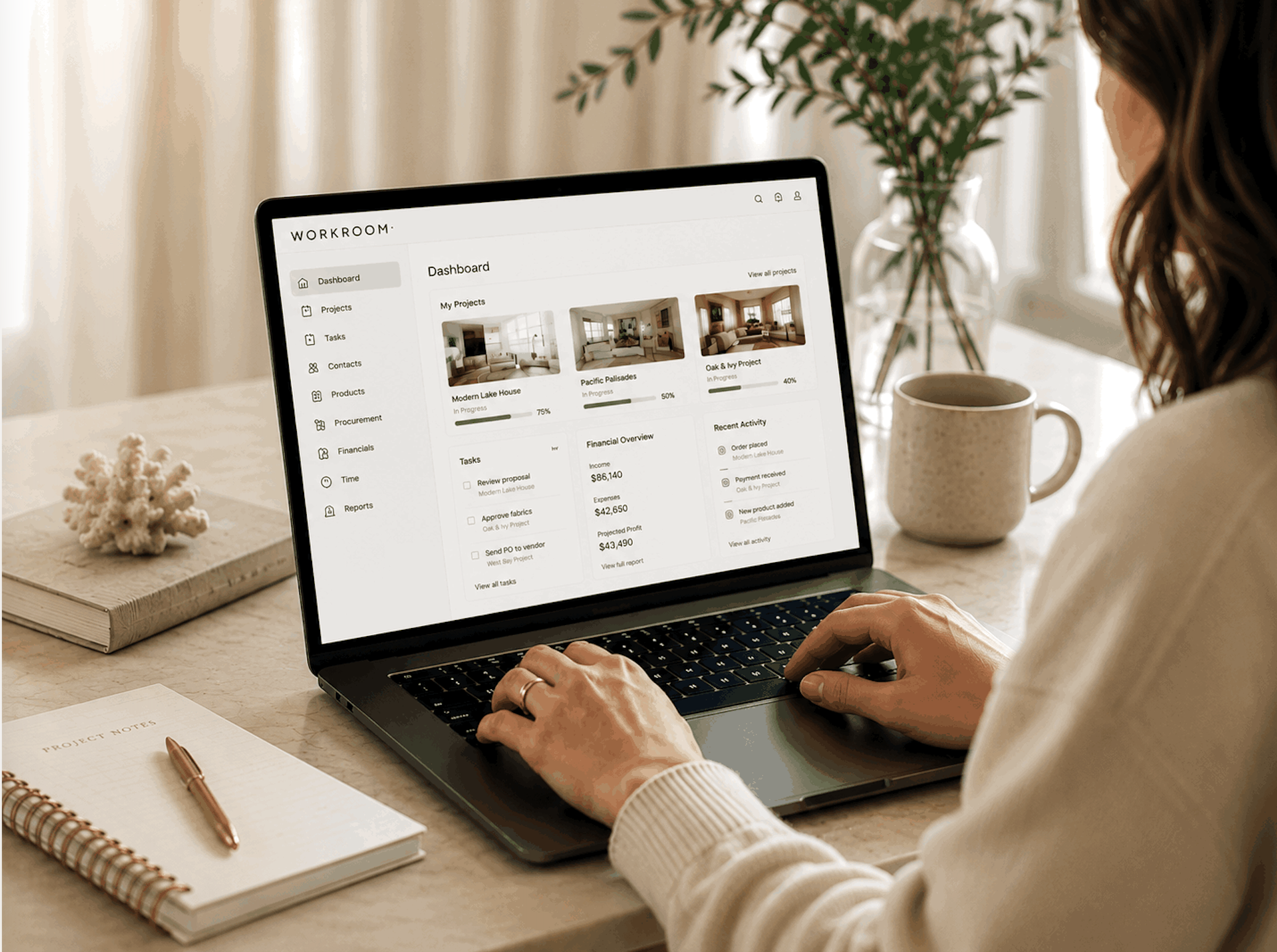
Why is this program making such an impact? Because the Interior Design Standard is House of Funk’s business structure. That’s right! The program includes a variety of modules with templates, processes, tools and tech for designers to implement the structure into their own businesses. Within each module are videos explaining the ‘why’ behind Funk’s processes, with her personal experiences and lessons learned weaved in.  

The program is delivered in a friendly digital format. Designers receive lifetime access, live virtual community events and access to the ultimate design community: the Standard Inner Circle. “Our mantra is ‘Rise, Designers, Rise’. By helping one designer at a time, we hope to see the entire design industry improve,” says Funk.

I want to tell you a little bit more about the designers that the Standard will benefit the most.

·       They've been in business for at least two years

·       They have at least 2 team members

·       Interior design is their calling - they've got the design stuff locked down

·       They're ready to level up and break into the luxury design market

·       They desire to have more confidence, joy, creativity, freedom... and profit

Of course, the Standard is not exclusive to designers that check every box, but their data and testimonials have shown that this is who has fantastic results with the Standard. 

This program is perfect for any designer who needs organized processes, wants to learn more about how a thriving and successful design practice does it and wants to bring joy and passion back into their business.

They give you digestible video explanations accompanied by Sandra’s process, broken down into step-by-step tasks for you to download and customize for your business. Here are a few of the highlights:

·       Interior Design Services Agreement

·       20+ Client email templates

·       Trade Agreement

·       HR Docs galore (job listings, roles, and responsibilities, employee agreements with office policies, onboarding processes, and more) 

·       Full Service Asana template (100+ tasks of our detailed full service and build/renovate process)

·       Potential Client Asana template (detailed tasks outlining and digging into this process from initial outreach to onboarding)

·       And tons of bonuses that will knock your socks off!

Plus, anyone who signs up using my link below will get our Passive & Multiple Income Streams for Interior Designers e-Book for FREE*!

Enrollment only happens twice per year and the next enrollment period starts today, September 28 – October 5, 2022. Don’t wait! Reserve your spot now at:  https://interiordesignstandard.com/danae

*The FREE e-Book will be sent via email 60 days after payment in full for The Interior Design Standard is paid.

ENROLL

As always, please feel free to reach out if you have questions!

I hope you have a wonderful day!

xx, Danae

The Best Social Media Post Ideas for Interior Designers

If you aren’t a fan of social media then one of the most time consuming tasks you have can be social media … unless of course you have a social media manager, in which case your life is much easier.

If you are doing all of your social media on your own, below are some tips for higher engagement but first, a few quick tips!

Block out time each month for social media creation and planning. Treat it like a date! No reschedules.

Create a monthly calendar and implement your posts into that calendar.

Using a planning tool such as Planoly or Tailwind, schedule out the entire calendar one time – then focus on your business until your next date with social media.

Schedule to post at the best times of day– what are those you ask? Below is what is recommended for your region.

  • Monday – 12:00 p.m.

  • Tuesday – 9:00 a.m.

  • Wednesday – 11:00 a.m.

  • Thursday – 11:00 a.m.

  • Friday – 2:00 p.m.

  • Saturday – 9:00 a.m.

  • Sunday – 7:00 p.m.

Finally, what you should you be posting for higher engagement.

  • Videos – the shorter the better these days. We’ve turned into a society with extremely short attention spans. A max of 60 seconds used to be recommended, now the powers that be are saying 35 seconds! Get really good at creating great content in 35 seconds or less.

  • Carousels – No time or desire for videos? Create photos that run similar to a video but they are still images, the movement will catch scroller’s attention.

  • Humor – People love funny posts. Be creative, if you are funny let your humor shine! Create posts about what NOT to do as an interior designer, funny things that happen to you in your day or your humorous observations.

  • Unique – Post about unique décor, strange things you find in people’s homes or unique connections to your story or your client’s story.

  • Pets and/or children – People love animals and children. I understand not wanting to post your children so use your own discretion but animals and kids are attention grabbers.

  • Be yourself – Life’s short so now is the time to do whatever you want. Color your hair purple, wear a bedazzled vest or wear funky glasses – people are attracted to those being their authentic selves so get personal. What is unique about you personally? Share it!

I recently saw a real estate investor influencer who was just bored and started dying his hair different colors for fun. His Instagram followers started asking him why he kept coloring his hair and if it was a marketing ploy. He decided he should start looking at the analytics. He found that he had the most engagement on posts when his hair was dyed red or green but overall, he’s had more engagement and made more money this year with dying his hair a different color every few months then he had in all of his previous years of business. Maybe it was a coincidence or maybe it become a fun thing for followers to see what color he’d die his hair next. Or even yet, maybe people were more likely to do business with him become he seemed relatable. No matter the reason, this has worked for him.

At the end of the day if you need social media help, please feel free to reach out by replying to this email.

We are always happy to help!

xx, Danae


THE INTERIOR DESIGN STANDARD

Don’t Miss Open Enrollment Begins for the Interior Design Standard by Sandra Funk - September 28!

This program is perfect for any designer who needs organized processes, wants to learn more about a thriving and successful design practice does it and wants to bring the joy and passion back into their business.

RESERVE YOUR SPOT TODAY!

T-Shirts! T-Shirts! T-Shirts! Don't Miss This Seasons Cutest Graphic Tees!

I spy with my little eye... these really cool t-shirts that you could buy! Don't miss this season's cutest graphic t-shirts, from business-casual to vintage-inspired. Head on over to our online shop to spy one of your own.

SHOP NOW

Get The Most Bang For Your Buck With Value-Add To Property

In a sense, any improvement to your or your client’s property will result in a higher property value. But that doesn't necessarily mean you're going to get your money back or make a return on the investment. And, as you will see, it's not just the type of remodeling you do, but the scale and strategy of the remodeling that determines the return on investment. Here are some of the top value-adds that can get you and/or your clients the most bang for the buck.

Improving Curb Appeal

The buyer experience begins well before stepping foot inside a home, and so does the property’s value. Consider some simple landscaping, such as re-mulching, pruning shrubs, and adding a few colorful plants, with potential to recover up to 100% of the investment. According to studies, it is possible to recover roughly 93% of the cost of installing stone veneer and 91% of the cost of a new garage or entry door. New siding or exterior paint also drastically improves first impressions. While not the first place some buyers may look, a restored roof adds significant value to a property, particularly if it has suffered water damage or is simply worn out. Outdoor spaces, such as a deck, patio, or pool, acts as a sort of extension of liveable area, which brings us to the next point.

Increasing Liveable Square Footage

One of the most important factors that determine the value of a property is the liveable square footage. If you have the space and budget, adding to the footprint of your property is a sure way to drive up its value. In particular, additional bedrooms and bathrooms are valued. If that is not possible, you can still increase the value by optimizing the space you do have. This can be accomplished by opening up common living areas, as the new generation of homebuyers generally prefers open floor plans. You can also remodel neglected areas, such as the basement, in order to add to the total area that is truly liveable.

Strategic Kitchen and Bath Remodels

Kitchens are known to be one of the focal points of a home, but note that a basic makeover gives an 87 percent return on investment while a major kitchen redesign only yields about 80%. A light makeover for your kitchen could include painting cabinets or putting in new doors, upgrading large appliances and countertops, or installing more modern cabinet hardware. Bathroom remodels work similarly. A superficial bathroom remodel can mean up to a 102% return on investment! Prioritize regrouting tiles and replacing mirrors, fixtures, and caulk around the shower, tub, and toilet areas.

Updated Systems and Energy Efficiency

Make sure that your electrical and plumbing installations are working properly so that they don’t detract from the sale value. While not necessarily an aesthetic improvement, upgrading HVAC, water heaters, and windows will provide the highest returns. Between the growing interest in more environmentally friendly options and the long-term savings associated with more efficient energy, buyers are increasingly attracted to these types of upgrades. Be sure to detail the benefits when marketing your property so buyers understand what they are getting.

Fresh Paint and New Floors

One of the most effective and budget-friendly upgrades is a fresh coat of paint. Opt for light neutral shades. It will work wonders for brightening up darker areas and breathing new life into not only walls, but cabinets, trim, and exterior. On the other hand, hardwood flooring is highly valued by many buyers today, and when installed properly, it can increase the selling price of a home by around 2.5%.

Home Staging

The objective of home staging is to make a property more appealing, thus increasing its value. Professional home stagers strategically organize and furnish the property in such a way that viewers can project themselves in the space and better see its potential. According to a recent study by the International Association of Home Staging Professionals, staging can contribute to a 20% boost in the sale price. Besides that, staging accelerates the sale of homes by three to 30 times compared to unstaged competitors.

Determining exactly which upgrades will get you the most bang for your buck requires a study of your property’s weak spots and the local market and demand. Working with a local realtor can help you to decide what upgrades make the most sense to invest in so your home or your client’s home meets the expectations of buyers in your market.

Happy Value-Adding!

xx, Danae

Celebrate International Literacy Day Coming Up on September 8th!

The cooler season approaches, evoking images of crisp air and curling up with a book and a hot drink. Is it any coincidence that this month marks International Literacy Day? Celebrated since 1967, UNESCO established this day, September 8 each year, “to remind the public of the importance of literacy as a matter of dignity and human rights.”

Surprising as it may seem, there are an estimated 750 million adults in the world who cannot read: not this blog post, not a road sign. Nor are they capable of holding a simple text message conversation, since literacy also encompasses the ability to write. In other figures, there is 90% literacy in the world for all males, and only 82.7% for all females.

In an impactful dialogue photographer Brandon Stanton held as part of his acclaimed Humans in New York project, a young Pakistani recounts, “My father used [his] knowledge to teach me how to read. I started with local newspapers. I learned that our village was part of a country…And I learned that there was an entire world around this mountain. I learned about human rights. And now I’m studying political science at the local university. I hope to be a teacher one day.” His story is just one example of the powerful ripple effect that learning to read and write makes on someone’s life, at all stages of development. It makes all the difference, both on a personal level, and when it comes to moving up the socioeconomic ladder.

Reading is also important for our health. Reading books, in particular, can improve concentration, attention span and memory. It has also been shown to reduce the risk of Alzheimer's and dementia later in life by maintaining brain health as we age.

So let's use the day to raise awareness of this issue and appreciate our own literacy, which can be so easy to take for granted. Here are some things you can do to participate in International Literacy Day.

INTERNATIONAL LITERACY DAY ACTIVITIES

Donate books. Round up a box of books that you or your kids don’t read anymore and hand them off at your local library, a US organization such as Kids Need to Read, or an organization that benefits African children, whose overall literacy rate is the lowest in the world, such as Books for Africa. These types of organizations also often accept financial donations in lieu of books.

Start a community lending library. These adorable mini-libraries are popping up all over and foster a love for reading, as well as a sense of community and goodwill. In fact, there is an official network of over 100,000 locations, so check on Little Free Library’s map for one near you, or find tips for building your own and register it for others to find!

Gift a book. Pick out a book for a special adult or child in your life that shows you were thinking of them. Books make great gifts for birthdays and holidays, but you don't have to wait until then. International Literacy Day or any other day is the perfect opportunity.

Create your own reading haven. Make it a priority to enjoy reading or writing by setting the perfect scene for yourself. Start by refreshing your personal library with a new book or notebook, get cozy in your favorite sweater, light a candle, and prep a mug of your favorite drink.

So get out there and celebrate International Literacy Day! Also, check out our Shop the Look for International Literacy Day for fun book-related items to treat you and your loved ones with.

xx, Danae

How Can We Help You?

Elite Design Assistants Wants Your Feedback on What You Would Like!

Are you super busy and overwhelmed? Do you feel like you are spinning in circles and need to take some time to get your business in order?

As you know, each week I love sending you valuable information regarding popular topics in the interior design industry and lifestyle topics that pertain to interior designers. Today, I’d love to hear from you. What topics would you like to learn more about? What types of things are you interested in but don’t have time to research? What are your pain points?

Are there other templates, prewritten content or other digital downloads you’d like to see? Do you need help with marketing, organization or streamlining processes? Are there services, courses, software programs or other things you’d like to see and/or learn more about?

Whether you use my services or not, my hope is that the weekly emails are beneficial to your business and that you are able to continue to learn and grow.

I want everyone to be successful, so please feel free to reply to this email and let me know what you need! And it doesn’t all have to be business related. Maybe you want to learn more about fashion, food, travel, fitness, self-care, whatever it is, let us know!

I hope you are taking some time to relax and enjoy the summer! It’s going fast!

Take Care!

Danae

Tips For Handling Difficult Clients

You might already have a recent clash in mind. As with any profession that deals directly with clients, it’s simply inevitable that friction will arise at some point. A problematic client is the last thing we want, because it can cause a once-promising project to fall apart, result in a horrible experience for everyone involved, or even damage your reputation as a designer. Given that, it’s crucial to have some tools in your belt that will help you to defuse tensions and move forward with these clients, if it’s meant to be. Let's look at some types of difficult clients and essential tips that will help you the next time you encounter such a case.

Disgruntled Clients

Disgruntled clients can range from disappointed to combative. It’s likely that their energy stems from a fear of losing control over their time, finances or control in general. Or perhaps there has been a misunderstanding about your services and they feel dissatisfied or even cheated. If a client has a reasonable complaint and respectful approach, they’re not included in this category.

HOW TO DEAL:

Take a deep breath, don’t take it personally or get defensive, and let them express their grievances in full to understand the root of their concern (unless they become outright aggressive). It’s better to resolve issues over the phone or in person than by email. Despite the saying that “the customer is always right”, you don’t necessarily have to agree with them. Be assertive, but do proceed constructively, it’s important to really listen and acknowledge their sentiments so they feel you care. Show you understand by saying “I’m hearing that you are concerned about X. Is that correct?” Don’t make promises you can’t keep, but offer a solution if at all possible. You may tell them you need 2-3 days to work out a solution that they’ll be happy with. If they continue to protest, it may be necessary to reiterate the limitations and part ways once you’ve followed through on your end.

Overly Demanding Clients

These clients may not realize or respect the time and resources involved in satisfying their numerous requests. This could mean them asking for one revision after another or for accommodations that aren’t included in your agreed scope of work, or having unrealistic budget or timeline expectations.

HOW TO DEAL:

Much of this can be prevented by being meticulous from the very beginning about the terms of agreement. This means detailing every step of every phase of the project, specifying the scope of work as well as responsibilities. That way, when the client comes to you with an exorbitant demand, you can kindly remind them that this is not included in your agreement (and be able to show them these terms in the paperwork they signed if it comes down to it). However, you should always try to accommodate clients’ requests if possible. You want a reputation for going above and beyond for your clients, but you also need to be compensated fairly. So, if you can, tell them, “Yes! We can absolutely do that for you. That service will come at a surcharge of X amount."

Know-It-All Clients

Despite hiring you for your expertise, we can occasionally come across clients who feel compelled to finish your sentences or outright explain to you how to do your job. For whatever reason, they may be under the impression that you are unqualified or inexperienced, or perhaps they just enjoy an audience to flaunt their knowledge.

HOW TO DEAL:

In any case, it’s not worth getting into a battle of egos. Stay patient and cordial, and don’t let them wear you out. It’s important to get your word in so you can be thorough in walking them through your own professional process. Use sentences that begin with “Our design firm…” because it instantly neutralizes the relevance of how they or other firms do things. You can refer to your portfolio and respond with “In all my years of experience in…” to reaffirm your position. At the end of the day, the client has to decide whether they want to trust you with their project or not, so let them know how you work and see if you’re a good fit for each other.

Uncommunicative Clients

Getting to know your client (and vice versa) is essential to avoid surprises of any kind when you are further along in the project. Clients who have difficulty expressing their wants or needs make it hard to help them effectively. Uncommunicative clients also might take too long to respond and cause delays in the timeline.

HOW TO DEAL:

When it comes to people of few words, it’s important to take those words seriously. But in order to gather enough information to carry out a successful project for them, you’ll need to start with a very detailed intake questionnaire. If their answers are vague or incomplete, print it out and go over it with them in person to fill in the gaps you need. If they say things like “You’re the expert, you decide,” they’re probably not clear on what they want. So propose an option or direction, but always get the client’s approval before moving forward. As part of the onboarding process, be explicit about the commitments needed from the client in order for you to be able to stick to the timeline. Your contract should include terms that protect your company from negligence on their part. Finally, send friendly reminders leading up to things like meetings and payment deadlines.

Prevention and Damage Control

Issues can easily arise that aren’t your fault, but you can still learn from these experiences. For example, your process or contract may have been crystal clear and gone smoothly with other clients, but you may find that there are certain steps or clauses that are worth fine-tuning and emphasizing more with future clients - just in case - so that expectations are clear from the get-go.

You can improve client relationships by avoiding impersonal templates in email communication and responding in a timely manner. Make sure your team is trained and equipped to handle these kinds of clients, as well. And if you do end up with a negative comment that could tarnish your name, be sure to respond publicly with a polite explanation so that prospective clients can see your attentiveness and your side of the story.

Finally, since dissatisfied clients are more likely to take the initiative to leave a review, always ask your happy clients to write positive reviews in order to bolster your company’s reputation. Fortunately, there are plenty of people who notice and appreciate quality customer service, so do everything you can and don't let difficult customers get you down.

xx, Danae

Top 5 Myths About Passive Investing

Passive investing is a long-term investment approach with the objective of building wealth gradually over time. By minimizing buying and selling, passive investing increases long-term returns through cost savings. Passive investing continues to gain traction as more and more investors abandon actively managed funds in favor of passively managed alternatives. However, if you want to get involved, take a look at these myths first so you don't start off misinformed.

 Passive investing is only for inexperienced investors.

Not necessarily. It’s true that passive investments such as index funds or ETFs are very easy for investors to track and comprehend. For individuals who want a simpler investment without having to continually monitor their portfolio, passive investing is ideal. But it’s also appropriate for more experienced investors who are cost-conscious and hesitant to assume financial risks associated with choosing a fund management.

 Passive investing typically yields lower returns.

It’s getting harder for actively managed funds to outperform the benchmarks. While actively managed funds aim to surpass the market returns, passively managed funds aim to mirror market returns. However, this does not imply that passive investments produce inferior returns. And in the long term, passive investments are rarely outperformed.

 The returns from passive investing match those of the index.

Not always. Theoretically, passive investment tools generate returns that are identical to the index. However, there may be circumstances in which a specific passive fund is unable to match index returns due to a variety of factors, such as the need for an index fund to keep cash on hand for redemptions, mutual fund costs, or the inability to purchase a stock at the index price. This disparity is called a tracking error.

 Passive investing limits portfolio diversification.

It’s debatable. Passive funds provide broader market access because they follow an index. Additionally, there are passive funds that monitor foreign indices as well as funds that bring regional diversification to a portfolio. Sectoral ETFs can also provide sectoral exposure at a lesser cost.

 Passive investing is a risk-free alternative.

Overall, passive investing has the same risk as active. Despite the lower costs associated with fund management, equity markets are vulnerable to systematic risks. These could be economic, geographical, political, or interest rate risks. If you’re investing internationally, you also face current rate risks.

Put simply, because of its potential to be relatively inexpensive and straightforward, passive investing is quite a promising approach. But regardless of how you invest, you should always keep in mind and put the fundamentals of investing into practice. These include paying attention to your risk profile, asset allocation, and maintaining diversification.

xx, Danae

Most Popular Ways to Value-Add to Real Estate Investment Properties

The added value of the property is that differentiating factor that will help you to highlight the properties you sell. In such a competitive market you need to know what it is and how to present that plus that your offer has. So, if you are looking to shine in your real estate business, you should read all the way to the end.

A value-add property is an investment that gives investors the chance to boost an asset's cash flow through upgrades, rebranding, or putting together a strong management team. Such investment properties may be dilapidated because of negligence on the part of the owners or a lack of funds for repairs. Investors can acquire these properties at a discount to market value, and then can improve them structurally, physically and operationally. This will increase rents, attract more tenants and reduce vacancy rates.

So what are some of the most popular ways to add value to real estate investment properties? There are countless elements that can be optimized, but the most common could be summarized as property renovations, management restructuring, and marketing efforts.

Property Renovations

Interior and exterior renovations directly impact the emotional response of the potential buyer. From the moment they pull up, they want to see a well-kept exterior. On the interior, make sure you are making the most of the square footage by analyzing the floor plan. Look for areas that waste space and could be used to add a home office, which is more in demand than ever. A modern, updated kitchen is especially appealing to the new wave of first-time homebuyers. Increasingly, people tend to prefer open-concept plans for common areas, so see if knocking down some walls would work for the space. Remodeling the basement is one way to significantly increase living space. Tenants also highly value security features, such as a gated entrance, and additional amenities, such as a community pool or gym. Improving the appearance and functionality of a property makes a powerful impression and multiplies the value.

Management Restructuring

Management restructuring, a less apparent improvement at first to buyers, is one way to improve efficiency and thus operating costs. A good property manager will ensure that your property and its tenants continue to receive the maintenance and attention they require. He or she will see to it that the units are kept full, maximizing revenue. Finding a property manager you can trust also frees you up to invest in multiple other properties at the same time.

Marketing Efforts

As with practically any service or product, the perceived value has much to do with the way it is presented to the consumer. It’s all about highlighting the value that is there through professional photos, enticing ads, a curated pitch, and a professional buying experience from start to finish. You may consider taking advantage of a home staging service to allow viewers to project themselves in the space and see its potential. For multifamily properties, a solid marketing strategy could also include rebranding the complex with a fresh concept that people want to be a part of.

In summary, when investing in value-add real estate it is vital to ensure that you have the right team, an optimized property and effective marketing strategies in place to ensure that your value-add investment strategy is carried out correctly. With effective execution, value-add investing can be highly lucrative.

xx, Danae

The Best Ways to Scale Your Interior Design Business

In the business world, what got you to one stage probably won’t get you to the next. It’s true that changing your structure or way of working, investing, and creating a work team can feel like a lot, especially if you have been working on your own for a while. But it’s a reality that you have to face in order to scale your business and take it to the next level. When you've gained enough traction to expand your team or move to a larger office, that's great news. But how can you start increasing your revenue without significantly increasing costs or effort?

Is it Time to Scale my Interior Design Business?

First, it is important to make moves at the right time. Enlist the help of a financial planner to crunch the numbers and conduct a study of the current market as well as the performance of your business so far. This will help you determine what, if any, changes are in order. A couple of indicators that it may be time to reevaluate things, too, are if you're getting more client requests than you have time to handle or are overwhelmed with administrative tasks. Basically, if you feel maxed out and like you’ve hit a revenue ceiling, take heart. It gets better.

Review Your Business Plan

Scaling can look different for different business models or directions. Write down the aims and values of your company, niche, and target client profile. Write your business goals and get help in mapping out strategic 1, 3, and 5-year plans, even if you later decide to make adjustments. Budget for slow seasons, such as the winter holidays, and be intentional about your investments. Having all of this established will position you to spot the best opportunities.

Renovate Your Service Offering

Evaluate whether any of your current service offerings should be repackaged or repriced. See what complementary services you could add and upsell, creating multiple revenue streams. And, perhaps best of all, establish additional passive income streams that will add to your revenue on an ongoing basis with minimal upfront investment. Some examples are promoting brands on your blog, earning through product affiliate sales, using platforms like Sidedoor or Like To Know It, becoming a brand ambassador, or selling digital products like an ebook or pre-made mood boards.

Be picky about your projects

Since you have already determined what your ideal projects and clients look like, don't waste time on projects that don't fit. Each project involves a certain amount of resources, and there will be projects that will strengthen your portfolio and reinforce your brand better than others. If you filter the requests you receive accordingly, it's another way to get the most out of your efforts.

Put Technology Tools to Work

To level up you will need to improve your digital marketing strategy. It's time to work with online marketing automation and CRMs, and perhaps improve the quality of your social media content. Don't skimp on tools that save you time, and help you organize, improve, and automate processes. There are many project management programs out there designed specifically for interior design studios that could make a real difference in your productivity.

Streamline Your Processes

Your company should have a manual with standard operating procedures outlining the order of tasks and responsibilities for each stage of a project, as well as administrative maintenance and growth initiatives. Analyze and write down what has worked so far, and keep your manual updated with any new insights. This will allow you to stay on top of your company's management, not let leads or other opportunities slip through the cracks, and also keep your team on the same page as part of your ongoing communication with them.

Train and Delegate

Design and administration are equally important to the success of your business, but there will be times when your need for the support of one skill set is greater than the other. Take inventory of the skills that aren’t your strong points and see if they fall into a similar category in order to hire one person to take them on. Start there and expand your team gradually, depending on your company’s needs at each juncture.

Properly training new hires and working side by side with them, especially in the beginning, will save you time in the long run. Keep in mind that the onboarding process can take a few months, so be prepared to invest that time and your salary amount, even before their work really starts to reflect in the company's profits. If you’re not ready to take on a new team member full-time, consider working with a virtual assistant who is able to help you with a wide range of tasks.

As you can see, scaling your business has everything to do with optimizing its various facets. It's about staying open to doing things more efficiently and taking advantage of revenue-generating opportunities while your day-to-day efforts are right where they need to be.

xx, Danae