What You Should Know about Working with Photographers as an Interior Designer

As an interior designer, the project is not complete after styling the last shelf. A quality visual portfolio of the space is invaluable in showcasing your work and attracting the kind of new clients you're looking for. Having a good relationship with the right photographer can make all the difference in the result, and that begins with coming to a clear agreement on expectations and photo usage terms. Let’s look at some points to consider when working with a photographer.

Who owns the licensing of the photos?

If a photographer shoots the photos, by default he or she owns the copyright to those images, and many will further specify this in the contract. On the other hand, if an employee of the design firm shoots the images, it is the employer who owns the copyright. However, every contract is different and all of the terms must be clearly stated so there is no room for doubt about the rights of each party. Even if the photographer claims copyright, they will usually be cooperative when it comes to the designer’s needs. That is, after all, the whole point of hiring a photographer! At the same time, as it has only gotten easier to share photos across the internet with a click of a button, if you are the copyright holder, you will have much more leverage to claim credit or even get photos taken down if necessary.

What use rights does the designer have for the photos?

Design firms generally want to be able to have free reign when it comes to posting the photos on social media and on their website, as well as for marketing and PR purposes. You also want to be able to freely offer images to magazines for exposure. The story of your project will be more appealing to top magazines if it has not yet been widely shared. If you are gracious to your photographer by negotiating for them to receive credit, it is good marketing for them as well, and it sets the tone for reciprocity.

Are you allowed to give permission to other businesses such as vendors to use those photos?

It is not as common for a design firm to license the images to vendors as it is for the photographers to do so. They may have opportunities with the suppliers of materials, fixtures or furniture that appear in the photos. However, you may be able to negotiate with your photographer to share a percentage, perhaps 10% to 20%, of those earnings. This is a point to discuss with the photographer as part of the big picture.

What should the contract include?

The contract must be comprehensive and fair. It should specify information including the legal names of both parties, start and end dates, cancellation or delay policies, copyright and usage rights, scope of photo editing work, confidentiality, liability and payment terms. Nothing should remain a verbal agreement, even if you have a good relationship with the photographer. Before signing the contract with the photographer, you must also receive permission in your contract with the client to photograph the space and use the photos publicly for marketing purposes.

How do you choose the right interior design photographer?

Look for a photographer who specializes in interiors and knows how to tell a story through their images. They should be able to take the viewer on a tour of the space in a thoughtful way so they can understand and imagine being there. A savvy photographer will ask you questions about the space, as well as your vision for the project, in order to be fully prepared for a successful shoot. If you find a photographer with compatible needs, it may open the door to establishing a mutually beneficial long-term partnership that works from a good understanding of your company's aesthetic, preferences and needs.

xx, Danae

Work With a Virtual Design Assistant (VDA) on Your Commercial Projects

We have become known for our virtual design assistant services within the residential interior design niche so many designers may not be aware that we also have very seasoned and experienced design assistants with commercial backgrounds as well.

We offer services such as:

  • Research, space plan for large- and small-scale projects.

  • Develop block plans or test fits in CAD & CET for both systems and ancillary products.

  • Respond and design per BID guidelines for RFP’s.

  • Create look books/moodboards or concept presentation layouts

  • Create drawings, layouts and renderings to communicate a design solution effectively through CET software

  • Generate detailed furniture specifications, pricing and discount for both systems and ancillary products using CAP or ProjectSpec

  • Create ancillary/systems look books or product alternates

  • Create typicals or “collaboration” areas using either systems or ancillary or both.

  • Send out quotes to ensure accuracy of pricing and manufacturer discounts.

  • Revise drawings, typicals or presentations per client/designer feedback

  • Create electrical or install documents per project needs in CET

  • Create graphic presentation, templates or any other marketing material per client standards

We are happy to discuss any other services, not mentioned above for any project.

Our commercial VDAs have worked for large scale firms, specializing in Steelcase, Herman Miller and AllSteel furniture. A few projects that are a part of their portfolios include, SailPoint, Big Commerce, Velocity Credit Union, HomeAway, Tito’s Vodka, Kaiser Permanante, UFCU, Oracle, Facebook, Adobe, SAP and Invisalign.

If you need help on your next commercial or hospitality project, please feel free to reach out!

xx, Danae

How To Balance Your Family Life And Your Business

Life can be hectic. Caring for your family and household can be a full-time job, and when you add running a business into the mix, it seems downright impossible! 

Balancing all aspects of life is an everyday struggle that all entrepreneurs face. Each demand of life requires a lot of attention, and there never seems to be enough time in the day to get to or finish all tasks. It can seem overwhelming, but by implementing small habits into practice, having dedication, and a little patience, it's possible to maintain your sanity when trying to balance your family life and your business. 

Here are a few tips, tricks, and strategies that can help you in conquering this seemingly impossible balancing act. 

Be Fully Present 

Even though multi-tasking sounds like it was MADE for entrepreneurs balancing their family life and business, it is proven that disastrous things can happen when your attention is stretched thin on too many things at once.

When it comes to juggling multiple responsibilities, entrepreneurs need to give their full attention to the task at hand, whether it’s something for work or something for your family. Being fully present can save you time. 

Create a Routine

With so many tasks to do each day for each aspect of life, creating a routine is essential for balancing your home life and business. Without a routine, you will find yourself losing track of tasks, wasting time, and ultimately feeling more stressed. Routines keep you organized and productive, and establishing set time frames for each task allows you to stay on top of things and be more efficient. That said, embrace flexibility, because we all know that things won’t always go as planned. 

Some helpful routines you can start today are: 

  • Prep a to-do list each night for the following day. 

  • Start meal prepping. 

  • Check and respond to emails at certain times of the day. 

Day-to-Day Goals

It’s a good thing to have a clear vision for your company’s long-term goals. It’s also great to have dreams and aspirations for you and your family. But have you ever paired them together? And the bigger question is how do you achieve that combined professional/personal future? 

Make it a point to have a clear and realistic objective for both your business and family every day. Ask yourself how your vision for your business helps your family and vice versa. By doing this, you will have an overall dream you can now break apart into smaller, day-to-day goals. Next, if you set aside time every morning to work on these day-to-day goals, soon, your larger dream can be achieved. 

Make Family Meals a Priority 

The idyllic idea of a family meal at the dinner table where everyone is sitting down together probably falls to the wayside when you feel you need to get back to work. But setting time aside solely dedicated to your family needs to be a priority, and mealtimes are a great way to do this. 

Mealtimes are the most sacred time for a family. It’s during these precious pockets of time that you get to bond, catch up, and cultivate that togetherness. It is proven that families that dine together are both healthier and happier.

Self Care

In this balancing act, it’s easy to forget to take care of yourself. Neglecting your mental health and physical well-being by trying to get more done at home or the office will hurt you in the long run. It’s important to find time and things throughout your busy week to recharge yourself and fulfill your own needs. By sleeping a little longer, exercising, or by unplugging mentally for even 30 minutes, you can become more effective in everything you do. Remember, building harmony between home and business starts by finding balance in yourself.

Balancing your family life and your business does seem like a daunting task. It requires not only sacrifice but effort. Ultimately, certain activities will have to be given up because they aren’t as important as others, and balancing these roles won’t happen successfully overnight. It takes you working at it to make it successful. 

By implementing some of the strategies mentioned above or some of your own, balancing your family life and your business may not seem so impossible.

xx Danae

Break Into the Luxury Market with The Standard!

As you know, I’m here to share with you the helpful tips, tricks, and information I learn in the interior design industry that will help you succeed in running the most fulfilling and profitable business possible. Once again, I want to share with you a business program I came across that’s goal is to improve the interior design industry one design firm at a time.

The Interior Design Standard, created by East Coast interior designer Sandra Funk (House of Funk), is making a huge impact on a number of interior designers’ businesses across the country.

Why is this program making such an impact? Because the Interior Design Standard is House of Funk’s business structure. That’s right! The program includes a variety of modules with templates, processes, tools, and tech for designers to implement the structure into their own businesses. Within each module are videos explaining the ‘why’ behind Funk’s processes, with her personal experiences and lessons learned weaved in.  

The program is delivered in a friendly digital format. Designers receive lifetime access, live virtual community events, and access to the ultimate design community: the Standard Inner Circle. “Our mantra is ‘Rise, Designers, Rise’. By helping one designer at a time, we hope to see the entire design industry improve,” says Funk.

I want to tell you a little bit more about the designers that the Standard will benefit the most.

  • They've been in business for at least two years

  • They have at least 2 team members

  • Interior design is their calling - they've got the design stuff locked down

  • They're ready to level up and break into the luxury design market

  • They desire to have more confidence, joy, creativity, freedom... and profit

Of course, the Standard is not exclusive to designers that check every box, but their data and testimonials have shown that this is who has fantastic results with the Standard. 

This program is perfect for any designer who needs organized processes, wants to learn more about how a thriving and successful design practice does it, and wants to bring joy and passion back into their business.

They give you digestible video explanations accompanied by Sandra’s process, broken down into step-by-step tasks for you to download and customize for your business. Here are a few of the highlights:

  • Interior Design Services Agreement

  • 20+ Client email templates

  • Trade Agreement

  • HR Docs galore (job listings, roles, and responsibilities, employee agreements with office policies, onboarding processes, and more) 

  • Full-Service Asana template (100+ tasks of our detailed full service and build/renovate process)

  • Potential Client Asana template (detailed tasks outlining and digging into this process from initial outreach to onboarding)

  • And tons of bonuses that will knock your socks off!

Plus, anyone who signs up using my link below will get our Passive & Multiple Income Streams for Interior Designers e-Book for FREE along with a FREE t-shirt from Elite Design Gifts*!

Enrollment only happens twice per year and the next enrollment period is March 23-30, 2022. If you are interested, you can sign reserve a spot now by clicking this link https://interiordesignstandard.com/danae.

*The free e-Book will be sent via email 60 days after payment in full for The Interior Design Standard is paid. The free t-shirt will be mailed 60 days after payment in full to The Interior Design Standard is paid.

As always, please feel free to reach out if you have questions!

I hope you have a wonderful day!

xx, Danae

How to Enhance Your Creativity as an Interior Designer

Do you ever feel like you lose your creative drive when you're in the middle of a busy week? We've all been there. Today on the blog, we're sharing tips to enhance your creativity as an interior designer. 

Visit somewhere new

Sometimes, it’s all about perspective. Whether you're looking for a distraction-free space, or simply looking for inspiration for your next project, changing your physical location can be the key to getting in the zone.

Visit a local coffee shop where the decor gives you plenty of ideas, or try a new spot to work for a while and draw inspiration. Forget your to-do list completely and head to a museum or historical building. 

Go on vacation simply for enjoyment (and not just for work). New cultures, music, and architecture can help boost creativity and let your imagination take flight. You’ll return feeling ready to dive into the projects that require your most unique ideas. 

Spend time outdoors

It’s no secret that nature can boost your creativity. The ever-changing landscape of a sunrise or sunset can be the perfect muse for a new color palette. Visit a local park or simply walk outdoors near your home. Bring a camera with you and take photos of the scenes that speak to you. Reference these photos later when you’re in the middle of a big design. 

Collaborate with others

Do you have a friend that you love to bounce ideas off of? Give them a call! Sometimes just talking with someone else can be instrumental in boosting your creativity and giving yourself a confidence boost for an awesome idea. 

Each individual’s unique experiences allow them to have a different perspective, which can help validate and spark new ideas. Grab a drink at happy hour with a friend or go for a walk to not only stimulate conversation, but to also draw inspiration from nature. 

What inspires you? We’d love to hear from you. 

xx Danae

Meal Planning - The Secret to a Successful Week

Happy Saturday! Today we’re chatting about meal planning and how prepping your meals in advance can help set you up for a successful week. 

We’re sharing tips and tricks from Kitchenda’s blog post, Why Experts Recommend Meal Planning for Every Home. You can read more here.

You’re busy running around to client meetings and running your business, so consider setting yourself up for a great week by following these simple meal planning trips. 

Meal planning can help improve health, save money, and increase weeknight downtime (I’m sure we can all use more of that).

Here are a few meal planning steps to help set you up for a successful week.

Understand your schedule

The first step is to open up your planner. What days do you have back to back meetings? Which evenings will you be home late? Knowing the answers to these questions will help you decide which meals and food should be planned for each day. Your meal prepping routine can include options for breakfast, lunch, and dinner or just a few meals each day if you have other plans, such as a networking lunch. The key is to plan ahead and be aware of your schedule.

Know your inventory

Do you have a fully stacked pantry or is your fridge empty besides some leftover takeout? No matter where you’re starting, it’s important to take inventory of the ingredients you have on hand. This helps you become aware of your starting point and make grocery shopping so much easier. 

Plan recipes for the week

Once you know what you have on hand and what your schedule looks like for the week, you can plan what recipes you’re going to make for each day. Pinterest and Google can be a great resource to help find recipes that use ingredients you already have. Once you’ve narrowed down your recipes for the week, make a list of any missing ingredients you need. Then you can head to the grocery store and stock up on any necessary items to begin your meal prep.

Do you find meal planning to be a valuable tool to setting up your week? 

xx, Danae

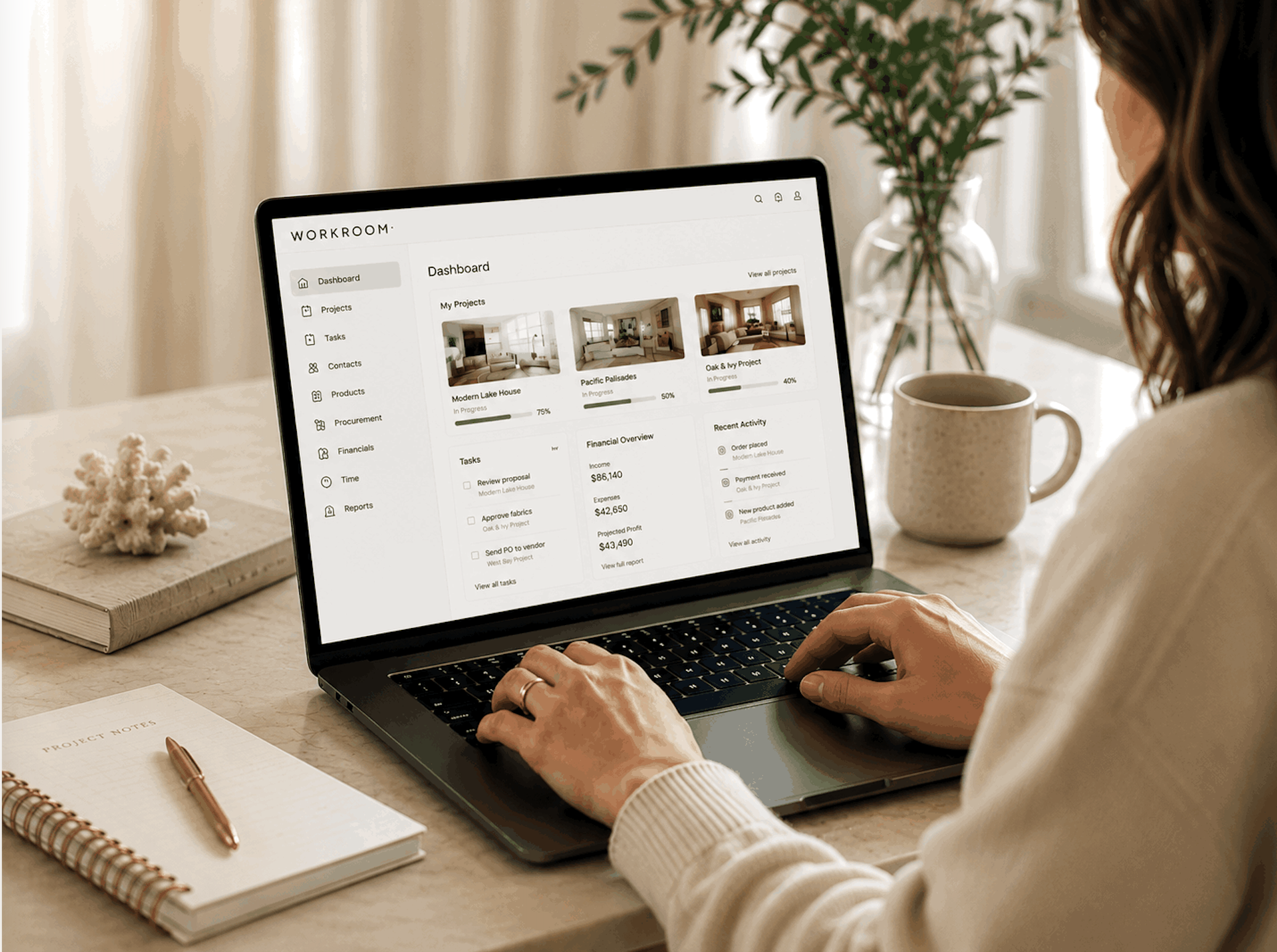
Project Management Software for Interior Designers

Project Management Software can be a game changer for your business. There are so many effective options out there… So how do you decide which software is the best for you? We’re highlighting four project management programs that can help take your business to the next level. 

Monday.com

As an interior designer, Monday.com  is a project management software that can help you manage vendors, contractors, and clients, manage inventory, and collaborate with your team, track and bill your time or create purchase sheets. You can store contact information, collaborate, and keep everyone in the loop. This makes Monday.com a great resource for a team of designers or a solo designer who wants to manage workflows with other vendors and contractors. 

Pricing:

Individual - $0 forever 

Basic - $8 per team member / month 

Standard - $120 per team member / month

Pro - $16 per team member / month

Get started here.

ClickUp

ClickUp is another great project management tool that can boost productivity. ClickUp offers spaces, where different aspects of your business or design business are stored. It also provides templates for interior designers that can allow you to store your specs, images, and proposals all in one place. This software is helpful for improving delivery times and tracking project statuses to stay on track and meet client expectations. 

Pricing:

Free Forever - best for personal use

Unlimited - $5 per month and best for small teams

Business - $9 per month and best for mid-sized teams

Business Plus - $19 per month and best for multiple teams

Try it here.

Asana

Asana is a project management tool that allows you to track and manage your work, use commenting to ask questions and provide feedback on tasks, and to easily find files related to various projects. Asana is a great tool for teams to track their projects, allowing design requests, teamwork feedback, and collaboration to take place easily among team members. 

Pricing:

Basic - $0 for individuals or teams just getting started

Premium - $10.99 per user per month 

Business - $24.99 per user per month

Sign up here.

GatherIt

GatherIt is another great Project Management tool for interior design teams that employs a visual approach to organization. This program allows teams to collaborate and have easy access to important project information. This software specifically helps visually organize projects, source products faster, stay on top of status dates and produce resorts and design deliverables. 

Pricing:

Studio $199 per month

Firm $349 per month

Start a free trial here.

Each of these software programs have different benefits and features that uniquely make them the best fit for your business. Consider trying out a free trial or continuing to research how other designers are using these programs to help decide which software is the best option for you. 

Are you looking for more resources that can help your business? Check out our other resources here.

xx, Danae

Should You Join A Buyer's Group?

Are you tired of being shopped by all of your clients? Are you frustrated that your trade discount isn’t large enough to add your markup and still be less expensive than retail? Savvy consumers are shopping everything these days and one of the biggest frustrations I see are interior designers tired of their clients shopping them online.

Buyer’s groups are hoping to change that for the industry. So what is a buyers group? A buyer’s group is a group of similar independent businesses coming together to leverage their combined purchasing power to receive better net costs and terms on the products and services they buy/use.

In the interior design industry, many buyer’s groups are comprised of a small group of designers located in the same region that all know each other. Unless you know someone in the group, they can be hard to find. This is one of the reasons why Heather McManus and her partner Tracey Taylor created The Designs Collaborative. This group is open to interior designers across the U.S. and Canada.

Another major reason The Designs Collaborative was created was because Heather became frustrated with vendors threatening to remove her stocking dealer price when she didn’t meet their yearly minimum. She decided it was time to get creative and comprised a way to not only help herself but also her fellow designers.

The Designs Collaborative started with five people and has now grown to 150 members and over 200 vendors. Interior designers need to apply for membership on the website and if accepted pay a membership fee of $370 per year, which is about $30 per month. Benefits of being a part of the group include:

*Stocking dealer price plus 10%
* A Facebook group
*Monthly masterminds
*Emergency fund for extenuating circumstances
*Discounted price on coaching

Working with a buyer’s group can not only save you time and money, it can continue to make you competitive in the industry. You will be able to take advantage of new purchasing power due to the pricing and revenue, plus instead of hiring full-time staff to help with sourcing and deciding what to charge, many interior designers can now hire a virtual design assistant at a fraction of the cost to help with their sourcing needs.

According to Heather, The Designers Collaborative is comprised of a group of kind, honest and hard-working interior designers. The members really love the group and are grateful for its existence.

For more information about The Designers Collaborative, please check out www.thedesignerscollaborative.com or contact Heather McManus at admin@thedesignerscollaborative.com.

**When considering working with a buyer’s group please do your research, get references and make sure you understand what your membership entails. There are some excellent groups out there, such as The Designers Collaborative, but there are others who may not be structured properly or are not prepared for extenuating circumstances.

Fashion Favorites for Interior Designers

Are you going through your closet this weekend? Between client meetings, running around to different projects and working at an office or at home, you’re always on the go. It’s important that you feel your best and can show up confidently. 

I’m sure you’ve heard this before, but how you dress and present yourself is important. This has nothing to do with your clients, although, of course, they are important too. But this is really about YOU feeling confident in the way you look. 

Have you ever put on an outfit, looked in the mirror...and thought WOW I look good. Then you go to your client meeting and you just carry yourself in a different way? And of course, the client starts the project. 

That is no coincidence. Your confidence is everything! And if you dress well, you will appear more competent and powerful. 

Because of this, I put together this board of some mix and match outfits that I think interior designers will not only love, but will feel amazing in. This board is designed so that you can mix these pieces however you want. 

Beyond fashion choices, here are a few extra tips for feeling confident when headed into a design meeting. 

  • You are the expert: Never forget this! This person decided to book a consultation because they know that you know much more than they do about this subject (or let’s hope they do….we’ve all had “those clients.”)

  • You are worth the price you charge: If you’re struggling with this one, just remember those projects where you charged too little for your services and it felt like your soul was aching. We’ve all been there. Maybe we’ll do another email on how to figure out what to charge for your services. hmmmm….

  • Plan: If you are just starting out OR if you are a seasoned designer, plan out some talking points. How will you bring up your processes? In what order will things be discussed? Is there a way you can make the verbiage easier for your client to understand? Is there anything you would like to change from your last project? Can you provide visuals for them so that the process is more exciting? 

How do you show up for client meetings? We’d love to hear any confidence-boosting tips that you may have. 


Click here to shop this look:

Shop the look

Have a great weekend!

xx, Danae

Get Published - How to get your work featured in a magazine

Having your work featured in a magazine is an accomplishment to celebrate! You’ve worked hard to create a space worth sharing… so how do you go about seeing your work published in a magazine? We’re sharing a handful of tips that can help you get your work featured.

Keep it offline

This first piece of advice may seem counterintuitive. Wouldn’t a high profile project that draws lots of attention be a great project to feature? The answer is yes; however, magazines are looking for original content to feature. You can share bits and pieces of your project in Instagram stories, where they expire after 24 hours, but wait to add this project to your portfolio until after your article has been published. Once your work is out there, go crazy sharing it on social media and updating your portfolio. This is a great opportunity to mention the feature as well. 

Hire a professional photographer

While this piece of advice is important for all your projects and work featured in your portfolio, it is especially necessary to hire a professional photographer to capture photos of your projects that you’d like to send to magazines. High quality photos make all the difference.

Keep it exclusive

Focus on reaching out to one magazine at a time. It can be tempting to reach out to many different journals and magazines to increase your odds of getting published in at least one, but an exclusive feature is much more appealing. Be patient, it may take time to get your project featured in a magazine that is the right fit, but persistence will pay off.

Focus on the story

While beautiful photos are essential, an interesting story will captivate the audience. What made your project unique? Did you use different materials or experience any particular hardships during the design or construction process? What was your inspiration? Did the client have a good story you can share? Focus on the story behind the design when you pitch your project. 

Have you had your work published? Share your publication with us – we'd love to hear from you!

Visit the online shop